The David Donnan Podcast Season 1 Episode 7 – The Bible in its World with theologian Mike Bird
December 24, 2022
For Season One of the David Donnan Podcast we are looking at ways to “steer toward scripture”. The David Donnan podcast was created to help develop resources for a life of faith in Jesus Christ.
Biblical Scholar Mike Bird joins us to talk about his scholarship, what the American church can learn from the wider Christian world, and why it is important to understand the world the bible was written in.
Mike Bird article referenced in the podcast:
Follow Mike Bird
Books by Mike Bird
Christmas Message 2022
December 24, 2022

Here is video of the sermon from Christmas Eve on Sunday, December 24th, 2022 at Glennville Methodist Church. Full Manuscript text is below the video.
Here is the text of my sermon manuscript for Christmas Eve worship services on Saturday, December 24th, 2022 at Glennville Methodist Church. Early children had read the Christmas story from Luke 2:1-20.
What would you do if you accidentally became Santa Claus? If you have to deliver all the presents around the world? That is the scenario that was in the Tim Allen family comedy The Santa Claus. It is fascinating because he becomes Santa Claus because he accidentally startles the current Santa on the roof calling him to fall to Santa’s demise and now according to the rules Tim Allen’s character must now become the new Santa Claus. And in the journey Tim Allen’s character learns a little about being a better dad and we all learn a little about Christmas.
The Santa Claus cinematic universe set up an interesting scenario. If you are beside Santa Claus when he meets his end you have to become the next Santa Claus. What if the next person was someone who does not celebrate Christmas. What if it’s a child? What if it’s someone who just escaped prison and they were serving a life time sentence? These are all scenarios that are possible in this universe. It is such a bizarre scenario that this year Disney plus released a limited series with some of the original cast and they tried to retcon, change the original story, to make it sound like just anyone can not become a Santa Claus by accident.
Friends, here is the good news for Christmas. There are no mistakes with God. You are not some accident that magically falls into earth. No, God has made you for this very moment. He has made you with purpose.
One of the interesting stories I read early on in my tenure here in Glennville was about how we had appealed our census data here. During the disruption of the pandemic it seemed hundreds of residents in the Smith prison were not accounted for which would affect our federal funding and more in our community.
Everyone counts to God. Christmas is the reminder of this. No one is created on accident and everyone counts to God.
Now this is pretty important especially on a day like today. I know this has been a pretty challenging year for some in our community. For my family we were blessed to celebrate Brand’y mom’s 60th birthday only to have her die suddenly a few short weeks later.
Grief is a hard thing to deal with. It is also a strange thing to deal with. There are moments when we feel like Sandra may walk right in. There are moments like at Lydia’s Christmas dance recital where we are used to seeing Sandra go and stand down front elbowing others out of the way, standing in the aisle to get the video on her phone, even though we knew she heard the announcement not to do that.
In the same way we have had grief in our family this past year we also know the world continues to grieve. Thousands of Russians were conscripted to go fight the so-called “special military operation” or war in Ukraine. Ukrainians have limited power, water, and resources to stay warm in the dead of winter and we know American families who have had loved ones deployed as part of a surge of troops to serve as deterrence for Russian advancing further.
It is in the midst of our broken world, in the midst of our own lives, that we need to hear the Christmas message this year. We need to hear that we are not here by accident and that we matter to God and the life of Jesus proves this.
Consider the broken world that Jesus was born into. We would expect for a king or the son of a king to be born in a palace in a safe and secure area. Yet, Jesus is born into a barn. We’ve talked about Herod the past few Sundays. He was the ruler over the area Jesus is born into. He had a palace, the Herodium, where he would be able to look over the town of Bethlehem. So we have this juxtaposition of earthly power, political skills, military might with Jesus, humble, lowly surroundings, no leaders coming out celebrate his birth but stinky shepherds… and not even the day shift, the B-team, the night crew.
Jesus came into the broken world for you and for me. We are not an accident and Jesus came for each one of us.
He came so that we can learn from Christ’s teachings but ultimately he came to save us. We matter to God because Jesus comes to help us with the one thing we can never do and that is to save ourselves. DA Carson has this quote about Jesus. He says:
If God had perceived that our greatest need was economic, he would have sent an economist. If he had perceived that our greatest need was entertainment, he would have sent us a comedian or an artist. If God had perceived that our greatest need was political stability, he would have sent us a politician. If he had perceived that our greatest need was health, he would have sent us a doctor. But he perceived that our greatest need involved our sin, our alienation from him, our profound rebellion, our death; and he sent us a Savior.
This means tonight you can accept the greatest gift off all, salvation from Jesus. It means you do not have to try harder this upcoming year but instead be more open to God’s leading. And it starts by asking to receive Jesus’ gift of forgiveness and making Christ the Lord over your entire life.
It also means we do not have to worry about accidentally becoming Santa Claus. We do not have to worry if we are accidents. That we can live lives with purpose. Even if we have had an incredibly tough year.
There was a New York state trooper who was dispatched for a 911 call during a storm. A motorist was in a car that went into a ditch and the snow plow came by and completely buried the car. The man had poor reception and called 911 several times but kept getting disconnected.
They were able to track him down to a several mile area but the trooper just had to keep looking through piles of snow to try to find the car.
After 10 hours the motorist was rescued by the trooper and it was just in the nick of time. You see the motorist car shut off from being buried in snow. The man was not able to get out and got so cold that his body quit shivering.
This is very dangerous because it means your body is starting to shut down. Thankfully the trooper got him in the police car and warmed him up until they could connect to EMS.
Friends, I know this has been a tough year. But do not give up. You may feel like you are an accident, struggling with grief, doubt, loneliness or buried in snow. But do not give up. We have good news.
As Christians, even if we do not feel it in our hearts at times, we can say it with integrity, “the hopes and fears of all the years are met in thee tonight.”
Merry Christmas!
22 Thanks for 2022
December 22, 2022

Family disclaimer. I don’t hate my kids. There are tons of things I am proud of them for. I want to be cautious about sharing too much about them online.
#1 The Glennville Methodist Church. I love the church I serve. We have had an amazing year of revival. The leaders, the staff, and spiritual depth continue to bless me.

#2 The enneagram. I know, I know, I was one of those people who could not stand the enneagram and people talking about it like it was the second coming of Christ. Yet, I went back the The Enneagram Type 3: The Successful Achiever by Beth McCord. Something about me was more open to what the Ennegram revealed about me.
#3 The church I serve is aligning to a new denomination. Right now hundreds of Methodists are realigning into new denominations. I am grateful my church did the hard work of figuring out where they needed to be and took the steps to get there.
#4 Pokémon. One of my children really got into playing the card game Pokémon. I never played it growing up but I have really enjoyed learning something new. I am fairly certain we do not play it exactly right because we make up some unique house rules sometimes.
#5 The transitional leadership council of the Global Methodist Church. Until our convening conference there is a group of leaders from all over the world piloting the new denomination. We are fortunate to have Rev. Jay Hanson from South Georgia on this team. I also was able to reach out and talk to Rev. Dr. Hidde-Gregoy and Rev. Jessica LaGrone. Both were very passionate about their work on the team and gracious enough to take some time to talk with me.
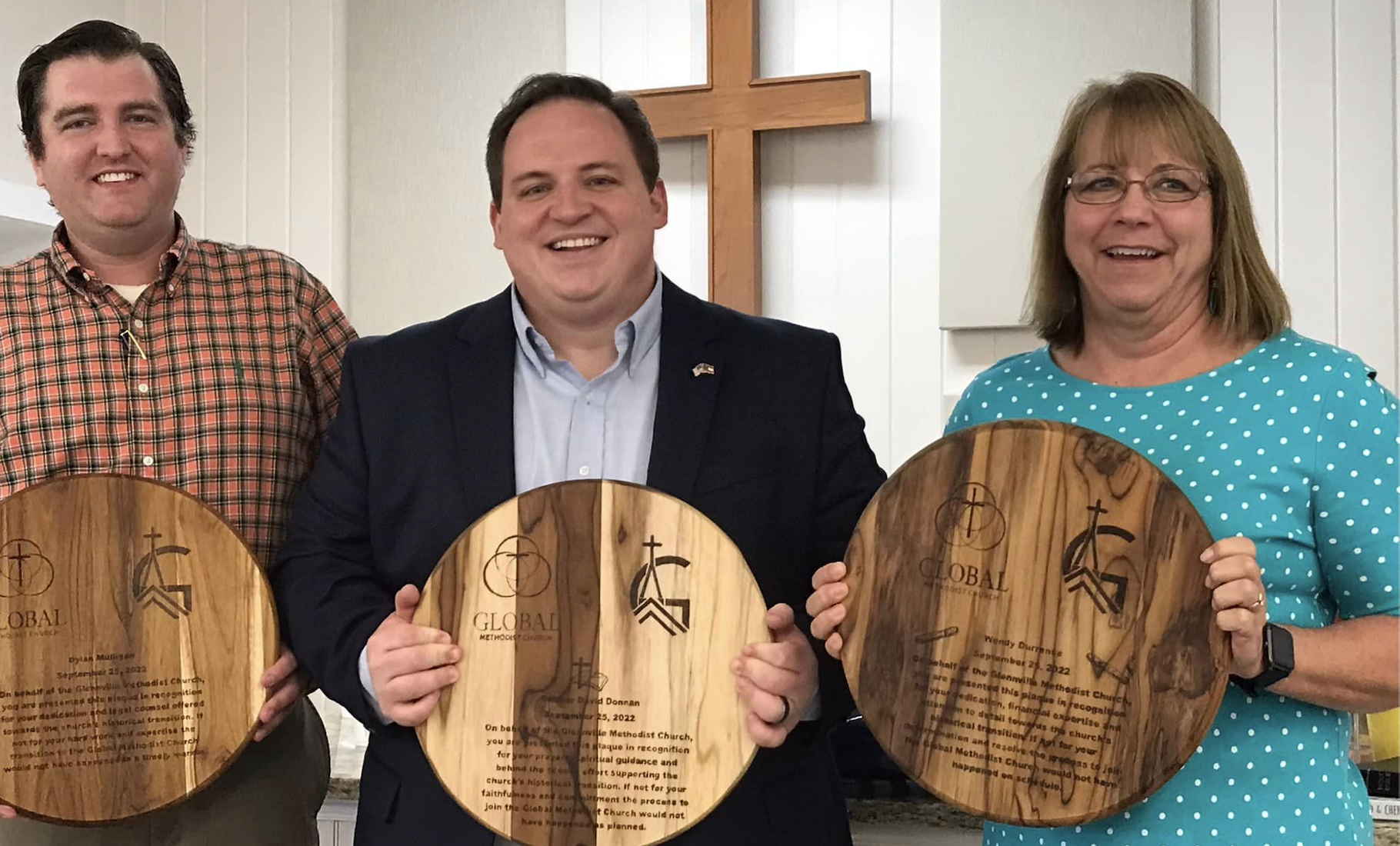
#6 Recognized as an elder in the Global Methodist Church. Once my church officially became a member of the GMC I was recognized as an elder in the denomination. During worship the church recognized my new status. I even wrote a liturgy you can use if this happens to you. While I am recognized as an elder I still will be ordained by a GMC bishop in 2023
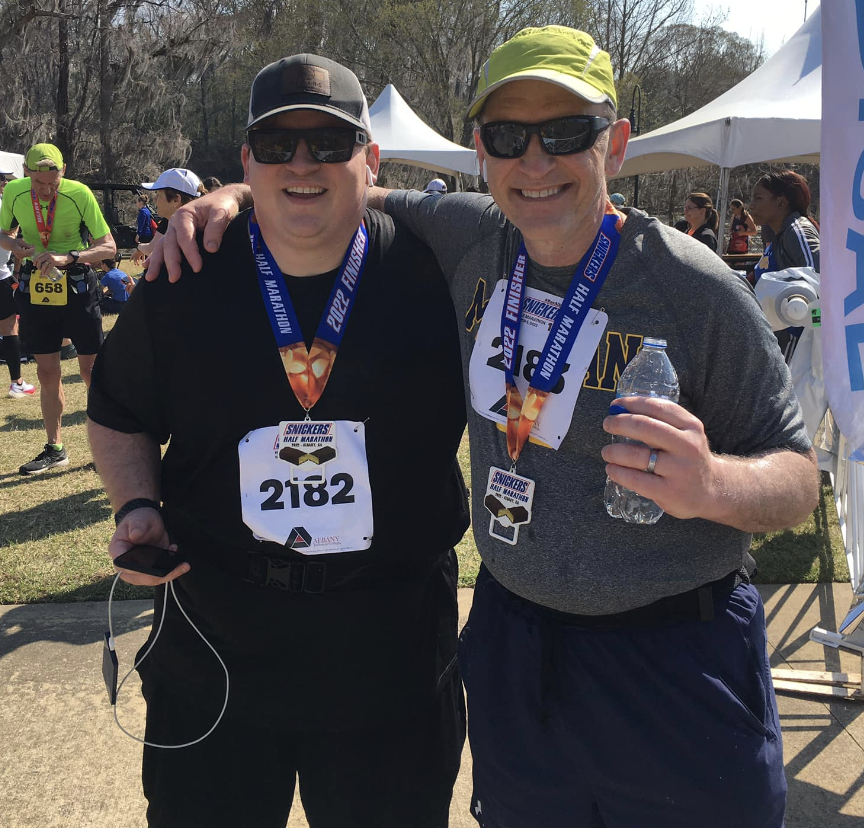
#7 I ran a half marathon. Well actually I ran a 10k on New Year’s day then in March I ran a half marathon. It was even sweeter to run with my father.
#8 NYC trip for my wife’s big birthday. My wife had a milestone birthday. We took a family trip to New York City for the occasion. It also was the first time my children went flying.

#9 Mackinac Island to visit my sister. My sister has worked several summers on Mackinac Island, MI. We went on our second family flying trip to visit my sister.

#10 Last Annual Conference with my South Georgia United Methodist Friends. I will truly miss getting to see everyone in my old company each summer. It was great to have one last time for us all to be together. While I have not been perfect I hope I have modeled how to leave with grace.
#11 Deep Dive Coaching with Brian Russell. Brian’s professional coaching has continued to add a ton of value to my relationship with God, family, and career. I am excited to be hosting him in 2023 for a prayer conference at my church.
#12 Doctor of Ministry Program. I am now closer to the end than the beginning. I am very grateful for Asbury Theological seminary and all my friends in the cohort with me.
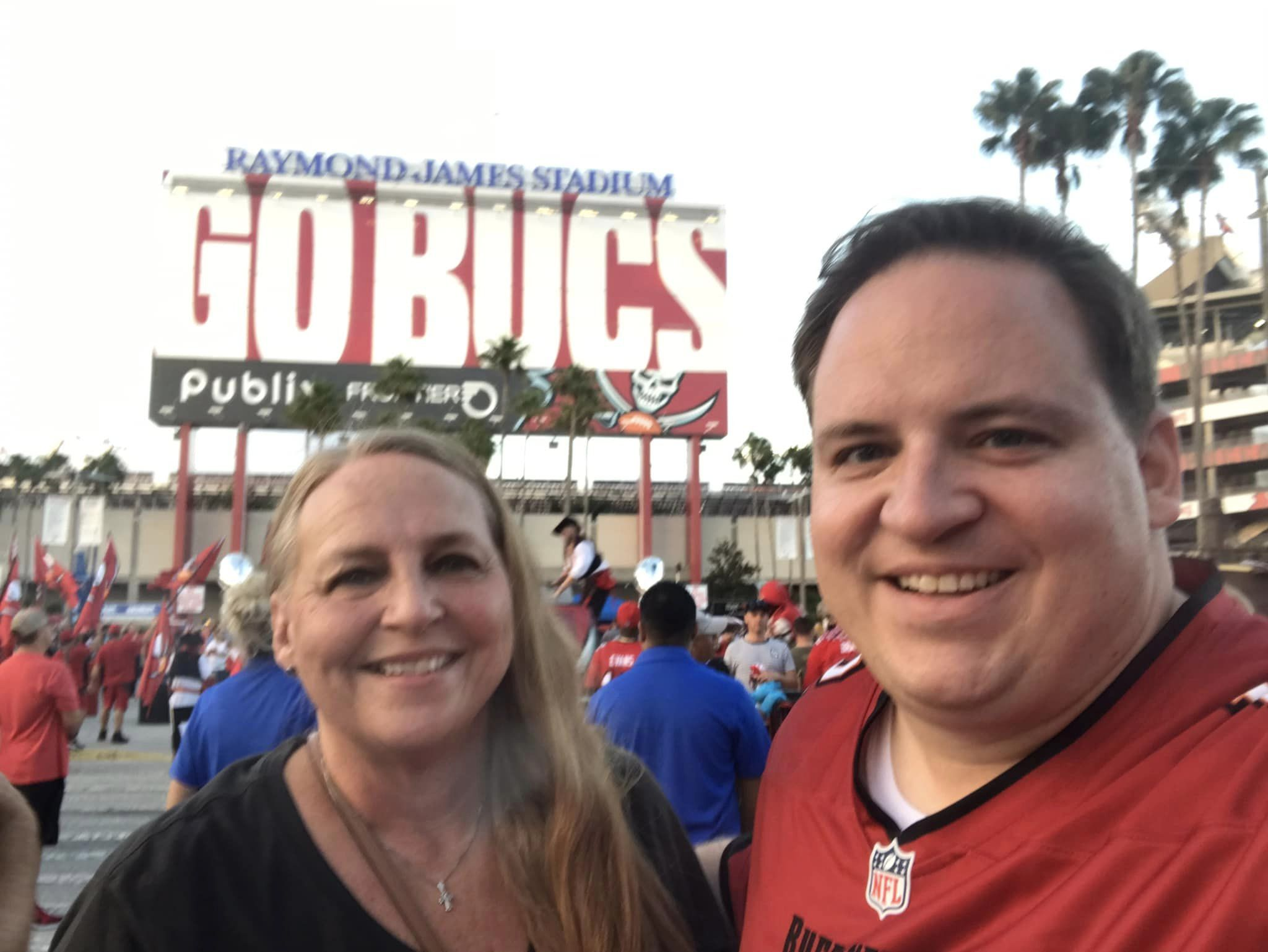
#13 Birthday trip with my mom. As a child I was all about the Buccaneers. I had not been to a game since high school. For my mom’s birthday I took her to see Tom Brady before he retires.
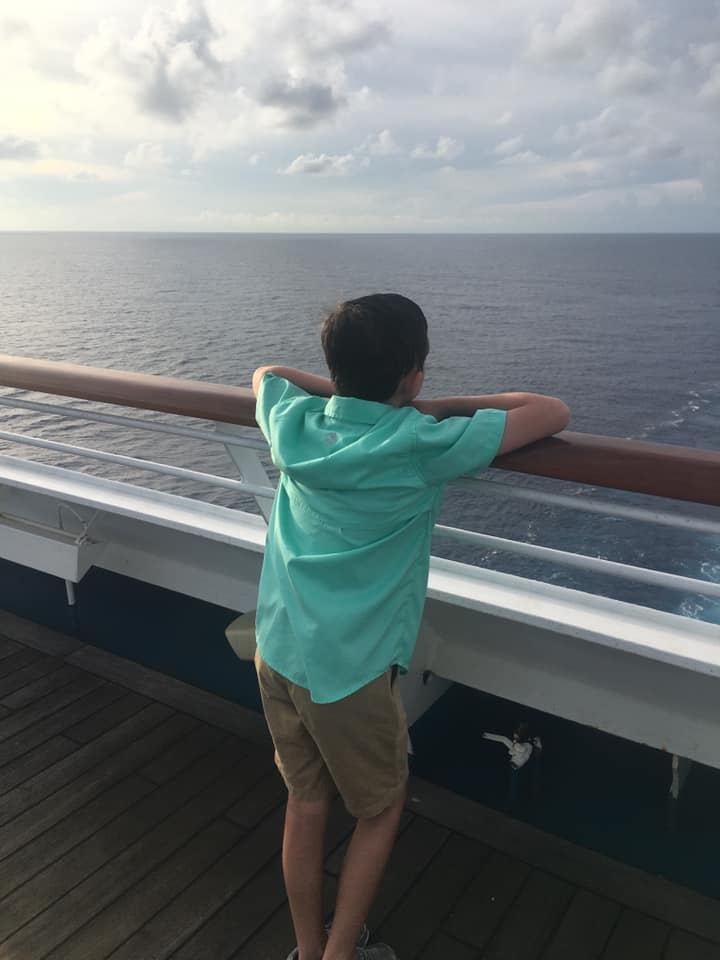
#14 Family Cruise. We were grateful to go on a cruise over fall break. The kids loved it. I may have gotten leg cramps from trying to take the stairs only.
#15 Isle of Hope River of Life. In 2020 I was scheduled to speak at the Isle of Hope River of Life Youth conference… but something happened globally. This past summer I was finally able to speak there for four nights. It was a great time.
#16 Visits with Friends. I continue to be encouraged by a group of pastors that I meet with annually. A couple of visits that stand out were lifting weights with my buddy Ben and getting to hear my friend Jack preach at his church.

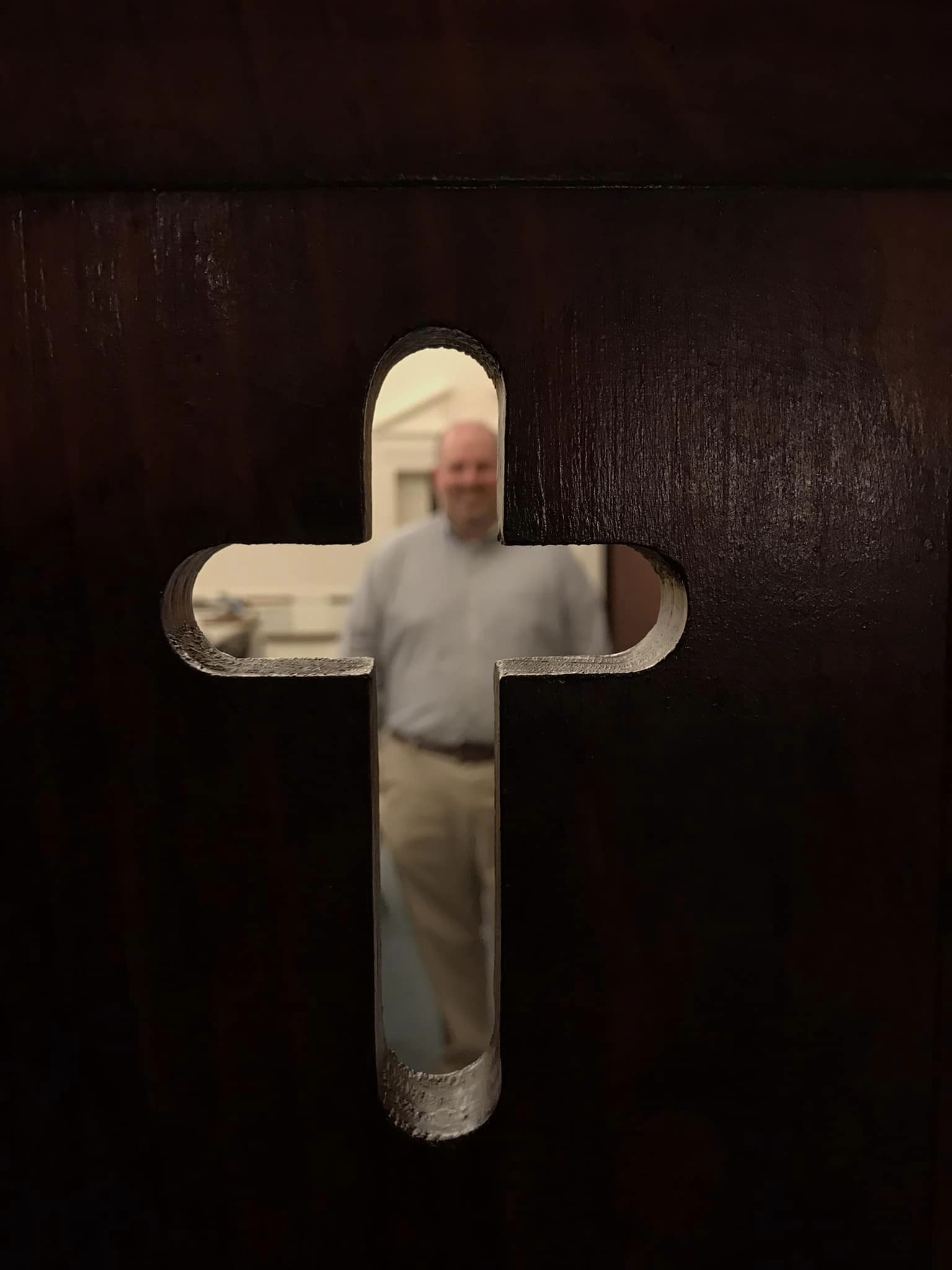
#17 Time with my wife. I love being able to get away with my wife. We had a couple of work trips that took us to Savannah and St. Simons. We also spent a couple of nights in Asheville, NC and Elberton, GA for some quick time away.

#18 Memorial Day Visit to my Grandparents grave. On Memorial Day we went to Anderson National Cemetery to visit the graves of my Granny and Grandpa. My grandpa was a WW2 B-29 tail gunner in the Pacific. It’s so meaningful to see the graves with the flags on them.

#19 Meeting Tara Beth Leach. I was so fortunate to run into one of the best preachers in North America at the New Room conference in Nashville, TN. Even better, she was very friendly and did an awesome job teaching.

#20 Spirit and Truth Weekend. I was blown away by a day of praying and learning at the Metter Methodist Church where they hosted the Spirit and Truth ministry team for several days of teaching on prayer. It once again showed me how powerful prayer is.
#21 Sharing with others about Jesus. I am honored to serve the people in the Glennville Methodist Church. I was also blessed to be able to teach at several places outside of my church. I spoke at chapel services at two private schools, led devotion at a nursing home, the first gathering of South Georgia Global Methodists, and spoke at an FCA event. All these events were fun and I hope I added value to people’s walk with the Lord.

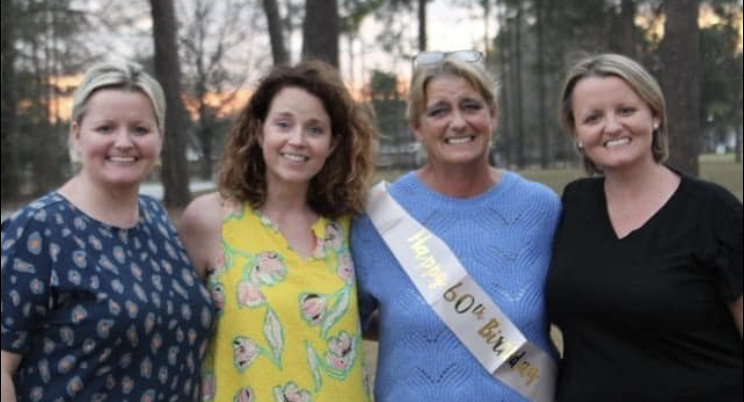
#22 Sandra McDowell’s 60th Birthday. This past year we celebrated my mother-in-law, Sandra Sikes, turning 60. Sadly, she died suddenly just a few weeks later. Grief is a hard and strange thing. It’s so hard to believe she is not coming back for the kids’ next performance or birthday. I am grateful we got to celebrate her milestone birthday even though we are still having a challenging holiday celebrating our first Christmas without her.