Philippians 1:21-30 What Happens When We Die?
October 24, 2026

Sermon notes from Sunday, October 18th, 2026
Intro
What happens when we die? This is the big question of our sermon… but it is also the big question of every life.
Not only are we asking what happens but also what difference should this make here in our lives.
Today we are going to get a small glimpse of the first question, what happens, and a challenge about the second question, what difference does that make.
Recap
Memory Verse: Philippians 1:6 NLT
Before we dive in let us consider what is happening in our timeline.
In terms of church history, Jesus has lived, died, resurrected, appeared to hundreds of people, and ascended into heaven.
Paul has gone from number 1 hater of Christians to a top champion of Jesus Christ. This has been at great personal costs to Paul. He has lost friends, been beaten, arrested multiple times, and more.
If you are looking at your bible you can see he said in Philippians 1:12, “Now I want you to know, brothers and sisters, that what has happened to me has actually served to advance the gospel.”
So Paul has set the standard that even the bad, horrible, and tragic circumstances can be used for good.
Last week we stopped mid sentence. We saw in verse 20 this:
I eagerly expect and hope that I will in no way be ashamed, but will have sufficient courage so that now as always Christ will be exalted in my body, whether by life or by death.
So here is where we jump in. Whether I live or die I want Christ to be exalted and lifted up! How can he say this?
Listen to this:
21 For to me, to live is Christ and to die is gain. 22 If I am to go on living in the body, this will mean fruitful labor for me. Yet what shall I choose? I do not know! 23 I am torn between the two: I desire to depart and be with Christ, which is better by far; 24 but it is more necessary for you that I remain in the body. 25 Convinced of this, I know that I will remain, and I will continue with all of you for your progress and joy in the faith, 26 so that through my being with you again your boasting in Christ Jesus will abound on account of me.
27 Whatever happens, conduct yourselves in a manner worthy of the gospel of Christ. Then, whether I come and see you or only hear about you in my absence, I will know that you stand firm in the one Spirit, striving together as one for the faith of the gospel 28 without being frightened in any way by those who oppose you. This is a sign to them that they will be destroyed, but that you will be saved—and that by God. 29 For it has been granted to you on behalf of Christ not only to believe in him, but also to suffer for him, 30 since you are going through the same struggle you saw I had, and now hear that I still have.
- Scripture Background
- What is our Christian View of Death?
Christian View of Death
Well, what does Paul say? Well Paul, nor Jesus, nor any part of the bible tells us everything we need to know. When my son was a little younger he asked, “Will I have my Nintendo Switch video game console in heaven?” I’ll give you my answer in a second. But first let us look at the hints we have from scripture.
- Paul tells us to live is Christ, to die is gain. He is winning either way. But how, what is he saying happens?
- Paul says in 2 Corinthians 5:8, “We are confident, I say, and would prefer to be away from the body and at home with the Lord.”
- In Romans 8:38-39 Paul says, “38 For I am convinced that neither death nor life, neither angels nor demons, neither the present nor the future, nor any powers, 39 neither height nor depth, nor anything else in all creation, will be able to separate us from the love of God that is in Christ Jesus our Lord.”
- Paul views our existence as being with Christ even when we die. While we do not have all the answers we do know Christ does not abandon us.
- But there is an intermediary time. There are two stages in Christian death. There is 1) Life after death then 2) Life after life after death. The first part is what we are talking about here. This is not the Roman Catholic view of purgatory. Which is a state you have to enter to be made righteous… We believe you are made righteous but what Christ has done on the cross for us… But the second part after death is in Revelation 21. Where we will be resurrected and have similar yet different bodies (I will be 6 ft 6 inches). There will be the judgement of the whole world and God will be our light and will wipe every tear from our eyes. Heaven and Earth will become one.
- So, there is mystery but we know there is the love of Christ and Christ himself present for us and with us until then.
- And to answer Luke’s question. God knows everything we need and if we need a nintendo switch in heaven it will be there.
So how does this affect how we live?
Paul seems to imply there are direct consequences. As a matter of fact he is modeling this.
Conduct yourself in a manner worthy of the Gospel. What does this mean?
Well we should always look at the fruit of the Spirit in Galatians 5:22-23 where we hear, “But the fruit of the Spirit is love, joy, peace, forbearance, kindness, goodness, faithfulness, gentleness and self-control. Against such things there is no law.”
How do we stand firm against our enemies? We do not have direct enemies, I think, in the sense of 1st century Christian persecution… but we do have enemies who overwhelm us… situations, hopes, fears, struggles.
Part of the Christian life is knowing we will suffer like Paul, like the Philippians yet, because Christ began a good work in us it is Him who will bring it to completion.
Pastoral Care Concern.
UGA got beat by Auburn. They went from 1st in the country to losing to an unranked team. I was texting with a preacher buddy who and wondering… is this rigged? There is so much money involved, so many opportunities to cheat, what if no matter how hard you try to just can’t win… there is a conspiracy against you.
Well that is what our life is like… but instead of Christianity being about no matter we lose… it is no matter what we win.
Death is still an enemy… but it is a beaten enemy. We do not look forward to dying… but we know, Christ will be there with us through it all. Accept his gift of relationship, call on him as Lord and Savior, and live a life now worthy of the Gospel, with His help not by your strength.
If you are here and feel like you have not done that… do it today. Make sure death is your beaten enemy. Then all our struggles in light of this will seem a little less.
Thanks be to God.
Prayer:
God, we do not look forward to dying. But we look forward to trusting you more and more. Not just for our deaths and the life after but with the abundant life you offer right now. Thanks be to you God. Amen.
Philippians 1:12-20 Sufficient Courage
October 24, 2026

My notes from Sunday, October 11th, 2026
Intro
- Recap of Paul and Timothy from last week.
- Memory Verse Philippians 1:6 NLT
- Scripture Background
Reflection
Big Idea: Christ brings about Great Reversals
Where is Paul in prison at? This is one of the debates in biblical studies. Paul has told us he is in chains. The interpretive issue here is Paul got arrested a lot.
Paul was one of the most important leaders of the first century church. He was also the least likely. The book of Acts is the story about his conversion and when he meets Christ he was literally trying to go kill other Christians. This is how much he hated Christians. Yet, Christ reverses his life.
Then Paul goes around and plants or starts churches. He tells people about Jesus and begins communities of followers. We are probably going spend some time in Acts next week but what I want you to think about is Paul was a hero and leader to a lot of these churches.
Luke and I are going to hear N.T. Wright speak in a few weekends. N.T. Wright is arguably one of the greatest living Christian scholars and theologians and he is going to speak on St. Simons.
So I was like, “I got to get me a ticket to that” Guess how much it cost? $90 dollars. They better let me sit on his lap and tell him what I want for Christmas.
Now this guy is not an apostle and a lot of church nerds are excited he is coming… now think of someone who is just a whole different level. The leader of the church. Telling about God, telling people outside of Jews they can be a part of God’s story, that Christ has died.
The Philippians raised money for him, sent gifts to him, partnered with him for this new movement and move of God.
Then he gets arrested!
Is the movement over? Yeah, we may still believe in God but we saw a lot of the ministry riding with Paul and Timothy.
They likely would have been crestfallen. This is hard news. Like Nick Saban leaving Bama. This iconic hero of faith is now arrested… As Rocky would say in Project Hailmary sad sad sad.
So where is the reversal?
Check this out:
12 Now I want you to know, brothers and sisters, that what has happened to me has actually served to advance the gospel. 13 As a result, it has become clear throughout the whole palace guard and to everyone else that I am in chains for Christ. 14 And because of my chains, most of the brothers and sisters have become confident in the Lord and dare all the more to proclaim the gospel without fear.
This is what God does!
There is a great reversal happening. What has happened to Paul may seem bad but it has actually served to advance the Gospel!
Paul is witnessing to the guards around him. And wherever he is imprisoned at the believers around him are becoming more bold because, “If he is in chains and not losing hope and even continues to share what more can God do in me?”
Church, we are all going to be in similar situations. Similar in which it looks like hope is gone, our season or life did not turn out how we expected, our challenges are going up fast than gas prices… yet we do not lose hope. God calls us to continue.
The rest of the verses tell us how to do this.
Paul is going to compare two different groups here which are sharing the gospel:
15 It is true that some preach Christ out of envy and rivalry, but others out of goodwill. 16 The latter do so out of love, knowing that I am put here for the defense of the gospel. 17 The former preach Christ out of selfish ambition, not sincerely, supposing that they can stir up trouble for me while I am in chains. 18 But what does it matter? The important thing is that in every way, whether from false motives or true, Christ is preached. And because of this I rejoice.
Two groups. One preaches out of envy and rivalry, but others out of goodwill and with love.
Church, did you know there are mean Christians out there?
We were at General Conference in Africa and there was a preacher from the salvation army. She said you know there are people who know a lot about Jesus are mean. She said I even know someone who had PhD in Holiness and was mean. She it was myself. And challenged us operate out of love of Christ.
There will always be so called Christians who have the head knowledge of Christ… but they do not have the love of Christ… and before you go make the list of who that it is STOP. This is about making sure we do not fall into the camp of everything we do is out of envy.
Finally, how does God help us to do this. We are looking at chapter 1 through this lens of God doing this good work in us and bringing to completion.
Look at these last few verses:
Yes, and I will continue to rejoice, 19 for I know that through your prayers and God’s provision of the Spirit of Jesus Christ what has happened to me will turn out for my deliverance. 20 I eagerly expect and hope that I will in no way be ashamed, but will have sufficient courage so that now as always Christ will be exalted in my body, whether by life or by death.
All the bad here turns out for good. We do not know how but check out the verbs here “expect” and hope”. Expect and hope that we will not be ashamed but have sufficient courage that Christ will be exalted somehow in our lives.
Now this is hard. God if your asking do not give me sufficient courage. I need more than sufficient, I want an overflow, I want you to show me the next step, I want you to lift the fog and mystery of life and show me all the steps and how they connect…
Yet, God in his goodness does not do this. He gives a sufficient amount to go on. This amount was enough for Paul and it will be enough for us.
The Gospel is Christ has given it all on the cross for us and in payment of our sin, so we now join in the story of God’s people. We all have a part to play.
And now, in our story, we can and will have great reversals.
One more thought. I have been reading one of the scholars Nijay Gutpa and listening to a podcast his has on Philippians and he was talking about in the first avengers movie there is this scene where Thor is fighting Iron Man. Thor is a norse God who can summon lightening with his hammer. And in his battle with Iron man he thinks he can really beat iron man by really charging up his hammer and hitting him with lightening. Well after he hits Iron Man it actually just charges his suit up and makes it stronger.
God wants to do this in my life and yours.
The Gospel brings the reversal, we can share Christ not with wrong motivations, but with Love, and we can do it with God’s grace and just the right amount of courage.
A South Georgian’s General Conference Recap
October 6, 2026
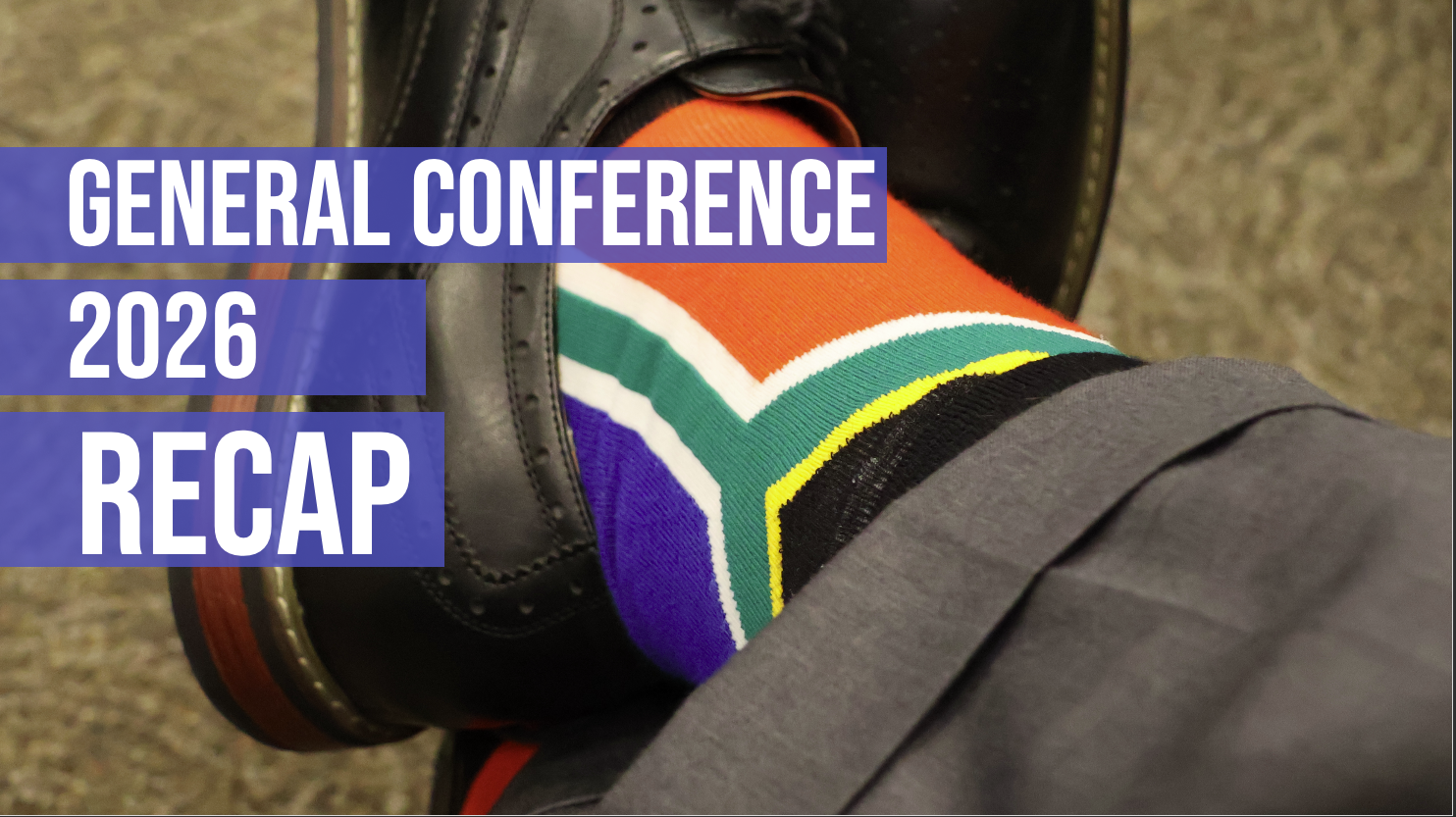
This was originally a talk given to the Glennville Methodist Church on Wednesday, September 23rd for our Wednesday night programming. These are my notes adapted for this post.
Brandy and I were blessed to attend the General Conference of the Global Methodist Church in Johannesburg, South Africa. We were part of the 16 South Georgia delegates along with Brandy and another spouse joining us. The conference ran August 30th through September 5th.
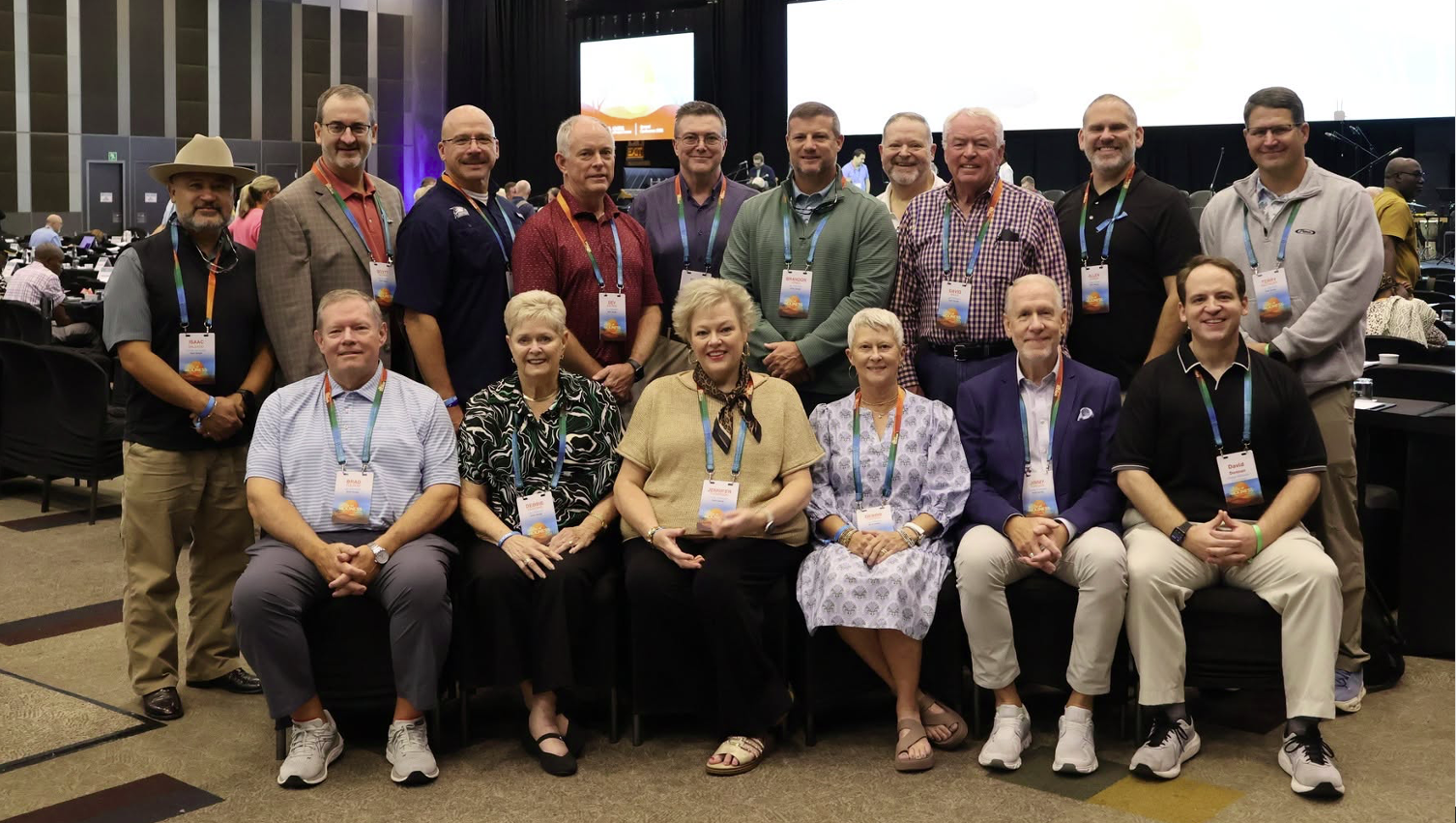
The general conference is the gathering of the Global Methodist Church where all of our book of Doctrine and Discipline is up for debate. We had a convening conference in 2024 in Costa Rica. The 2026 General Conference now begins a six year meeting schedule. So this was the last gathering of the entire church for this purpose until 2032. No location has been announced or decided. Why not Glennville, GA?
Travel
One of the challenges of this conference was just how far it is to go. For Brandy and I, the flight from Atlanta to Johannesburg was approximately 8,440 miles. We left Glennville at approximately 3:00 p.m. Friday and walked into our hotel about 24 hours later with a drive to Savannah, flight to Atlanta, then the long flight from Atlanta to Johannesburg, a drive to Sandton, the area of Johannesburg we were in.
The only way we could attend was for Brandy to use all her personal days but also to have a church which supports us. The Glennville Methodist Church allowed me back to back Sundays out of the pulpit. My mom was an angel keeping our children alive. Also, being able to leave contact information for my mother of some of our church members was a reminder how our church is truly an extension of our family. We were able to go because of you all. Thank you.
For the long flight I watched Anaconda, The Lost World, Jurassic Park, and Inception. Inception is a movie about going into people’s dreams… and dreams within the dreams to implant ideas, which is funny because I kept actually falling asleep and waking up confused if I was in a dream or watching the movie.
Hotel
We stayed in a very nice hotel. The New Zealand All Blacks rugby team was staying in our same hotel. Several times when we would get off the elevator there were fans lined up to be disappointed to see us and not the athletes heading to practice.
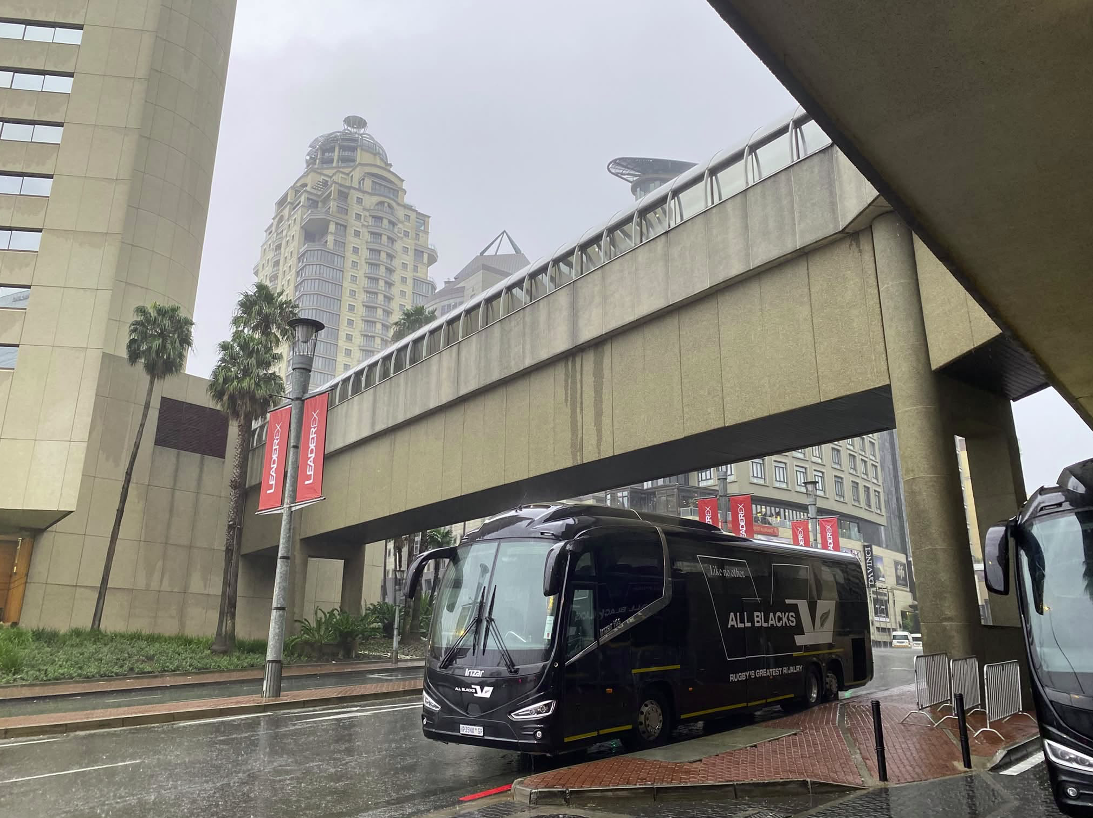
Our hotel was connected to the convention center which was convenient. Several delegates from the General Conference were staying in our hotel but other delegates had to walk in or bus in so we were blessed in our proximity.
Worship or Business?
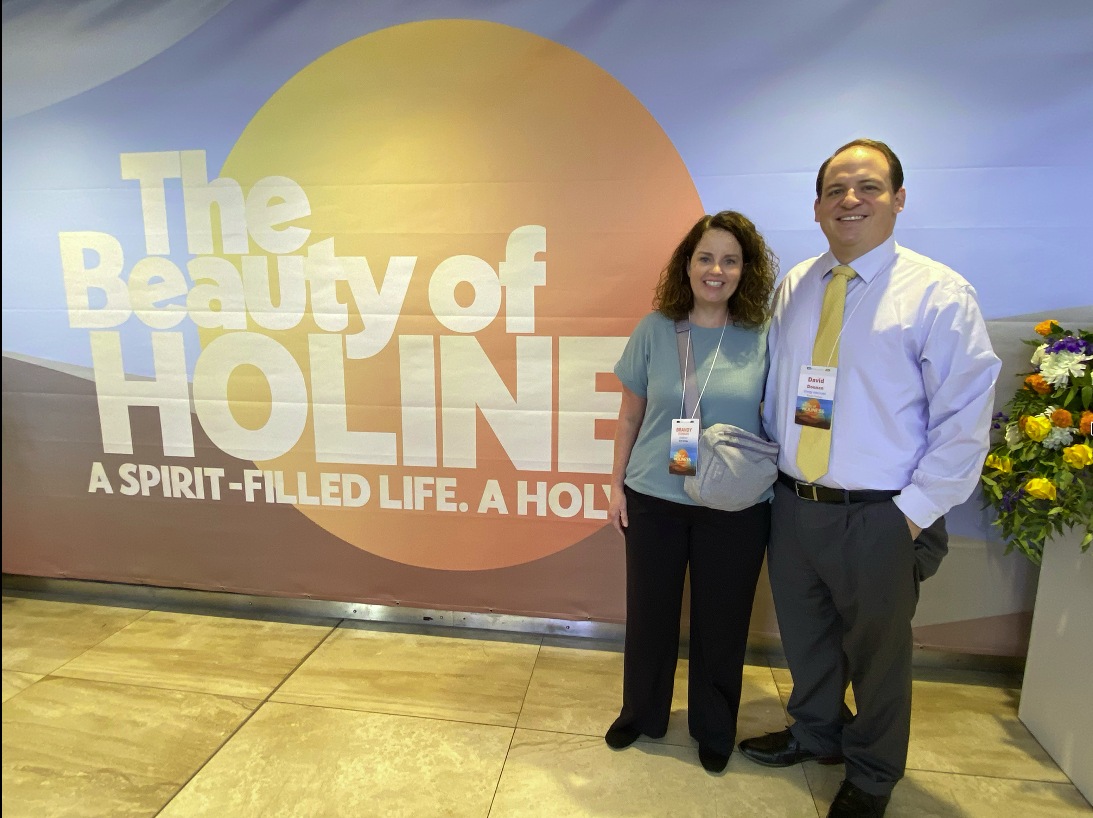
The conference was worship and business. There were moments where all could look and say they are singing, preaching, and celebrating communion. That is worship! These clear worship moments happened every morning.
Then there were moments in halls during the breaks and over meals where we might say that is fellowship!
Then there were moments of discussion, back and forth, Roberts Rules of Order, and more. We might say that was the business.
There were also moments where I was shooting videos, writing scripts, and editing videos. That was communication business and work.
But as I reflect on it I look back and see all of it was worship.
The theme of the conference was the Beauty of Holiness and I saw this beauty in all aspects of the conference.
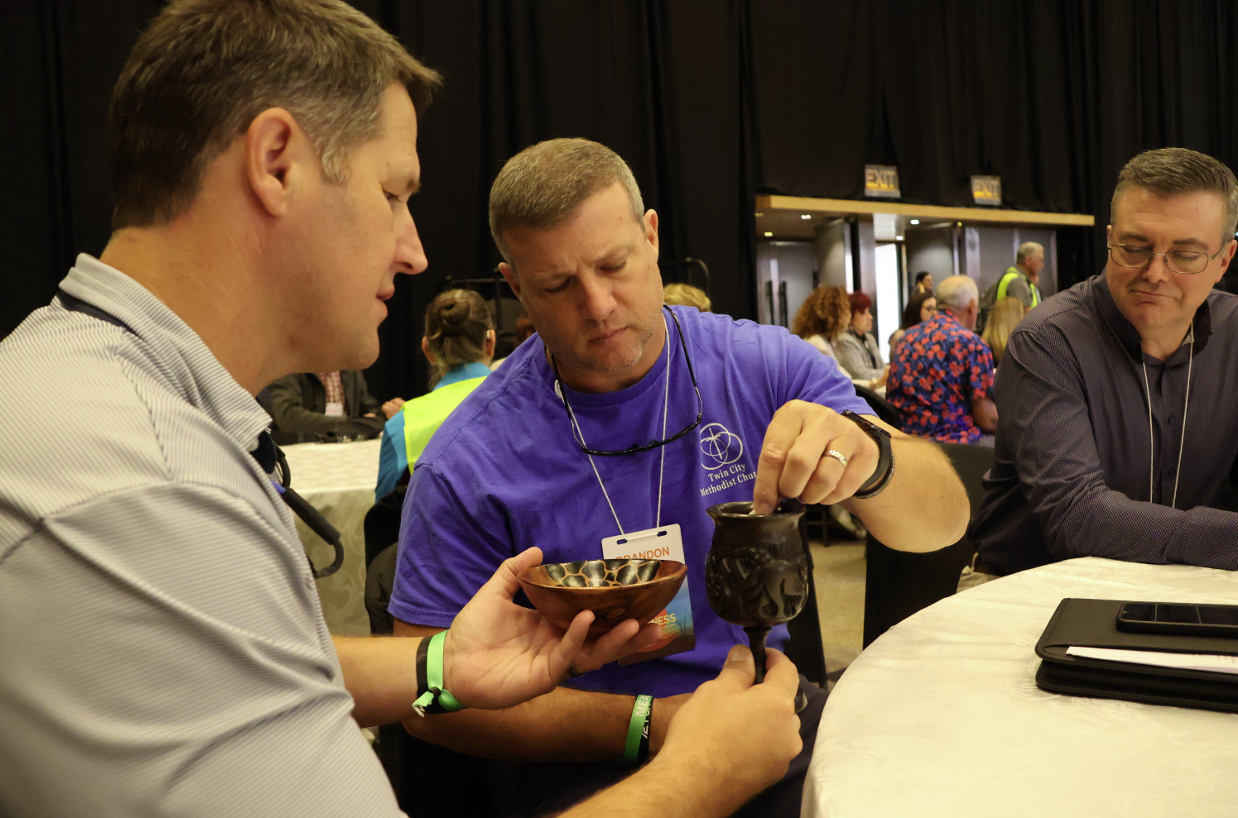
The Conference Flow and A Surprise
The conference began with a day of plenary work. Plenary sessions are when all the conference is meeting together.
On the opening day we had the largest surprise of the conference. Our process for electing bishops was still forming at the 2024 conference in Costa Rica. So we elected several short term bishops who would serve this short window until 2026 where we would elect bishops for six-year terms. For the bishops who were elected short term and wanted to run again in 2026 they needed a ¾ vote of support to run again. The three bishops attempting to do this were Bishop John Pena Alta, Bishop Carolyn Moore from Augusta, and our current Bishop, Leah Gregory.
We already knew Bishop Gregory would not likely be our bishop because of the way our conference was shuffled into a new cohort of annual conferences. We were surprised when Bishop Alta and Bishop Moore received enough votes but Bishop Leah just missed the super majority needed.
I personally lament Bishop Gregory was not re-elected. I think we have been blessed in South Georgia by having Bishop Jones and Bishop Gregory as our episcopal leaders.
I do also have worries that we now have fewer female bishops then when we started. Women in ministry will be an important issue to keep in front of us as a denomination.
Legislative Committee
The next several days were focused on committee work. There were 8 different committees.
- Doctrines and Sacrament
- Social Witness
- Local Church
- Ministry
- Superintendency
- Conferences Committee
- Constitution, Connectional Organization, and Finance
- Judicial Administration (chaired by Jimmy Towson from South Georgia)
These committees had 471 to work through at one point. Each committee would break up into sub committees.
They could
- Affirm a petition. If it received 90% affirmation it would go on a consent calendar, meaning it would not need to be discussed individually before the entire body. However, it could be pulled from the consent calendar to be discussed by a small threshold.
- Reject a petition. It could be rejected in favor of another petition which better addresses their item or straight up rejected.
- Refer a petition to another committee.
- Recommend a Task Force to be formed to come up with a more detailed proposal.
As an alternate I was able to float around into all the different committees to get footage for my video updates. The one I was most interested in was the Doctrine and Sacrament committee because they were discussing the Articles of Faith which I will discuss later.
I was subbed in on the Social Witness committee for a couple of hours. I was calling the question, asking for points of order, and talking way too much. I feel confident this committee was happy to see the original clergy return the next morning.
If memory serves correctly, all day Monday and Tuesday we were in the legislative committee. Wednesday, we elected bishops together and also had committee work. Then into the night on Tuesday and Wednesday, committees worked later. Thursday, Friday, and Saturday were plenary sessions.
One of the special nights was the celebration of Africa night where we had music, food, dances, and a night of African culture.
The Volume
One thing which surprised me was the volume of work done. A couple of people have asked about a certain petition and I have responded, “I don’t know.”
It is hard to follow when you are not on that specific committee. Then you do not know what changes are made. It is hard to remember if it is on the consent calendar or if it got pulled for debate.
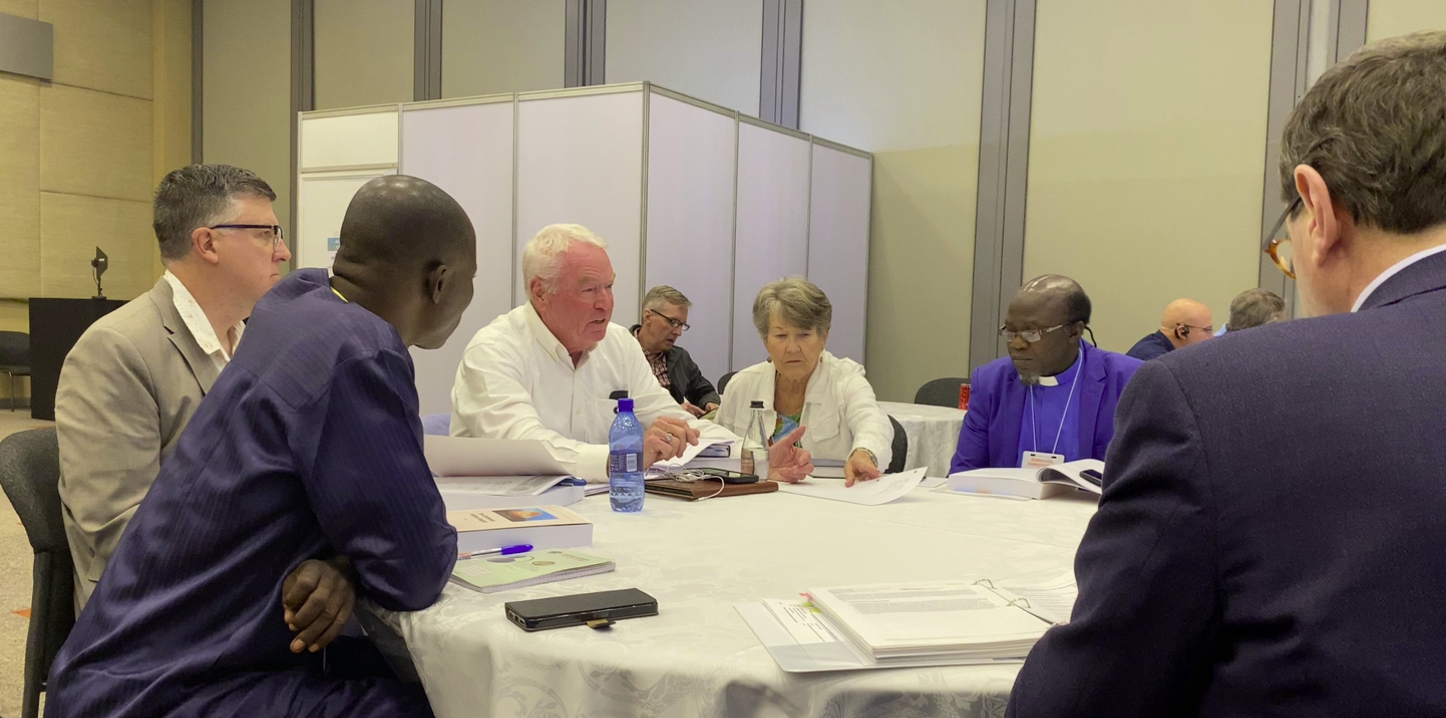
Even the articles of faith which were the most important item have not had the final version published to my knowledge because they were edited on the floor during the plenary session (the articles have been released since I gave this talk).
And even though there was a large volume there was confidence there was an appropriate chain of custody for all the work as well as a high level of trust.
The Articles of Faith
As mentioned before, the Articles of Faith were the important agenda item for the conference.
First, let’s talk about what an article is. The creeds, like the Apostles’ Creed and Nicene Creed are in general what the church believes across denominations and different branches. Even churches who do not believe in the creeds, if you ask them line by line they mostly affirm the creeds’ teaching.
Creeds equal basic Christian doctrine.
Articles are what are unique to a denomination or community.
In our previous connection we had two different statements. We had the Articles of Religion of the Methodist Church and the Confession of Faith of The Evangelical United Brethren Church.
In 2024 the general conference created a task force to reconcile these two statements. They came up with the Articles of Faith to give us an official doctrinal standard of the Global Methodist Doctrine.
I am working on a longer article for what this actually means to the average person in the pews. However, there are several groups that these articles will mean a lot and have an impact. For Pastors and people writing about ministry for ordination will have a clean statement of what we believe. For confirmation classes and people who want to explore deeper of what it means to be a Global Methodist this will be a great summary of belief. We now have a clearer statement to provide our standards. We are as William Abraham once wrote, “Waking from Doctrinal Amnesia.”
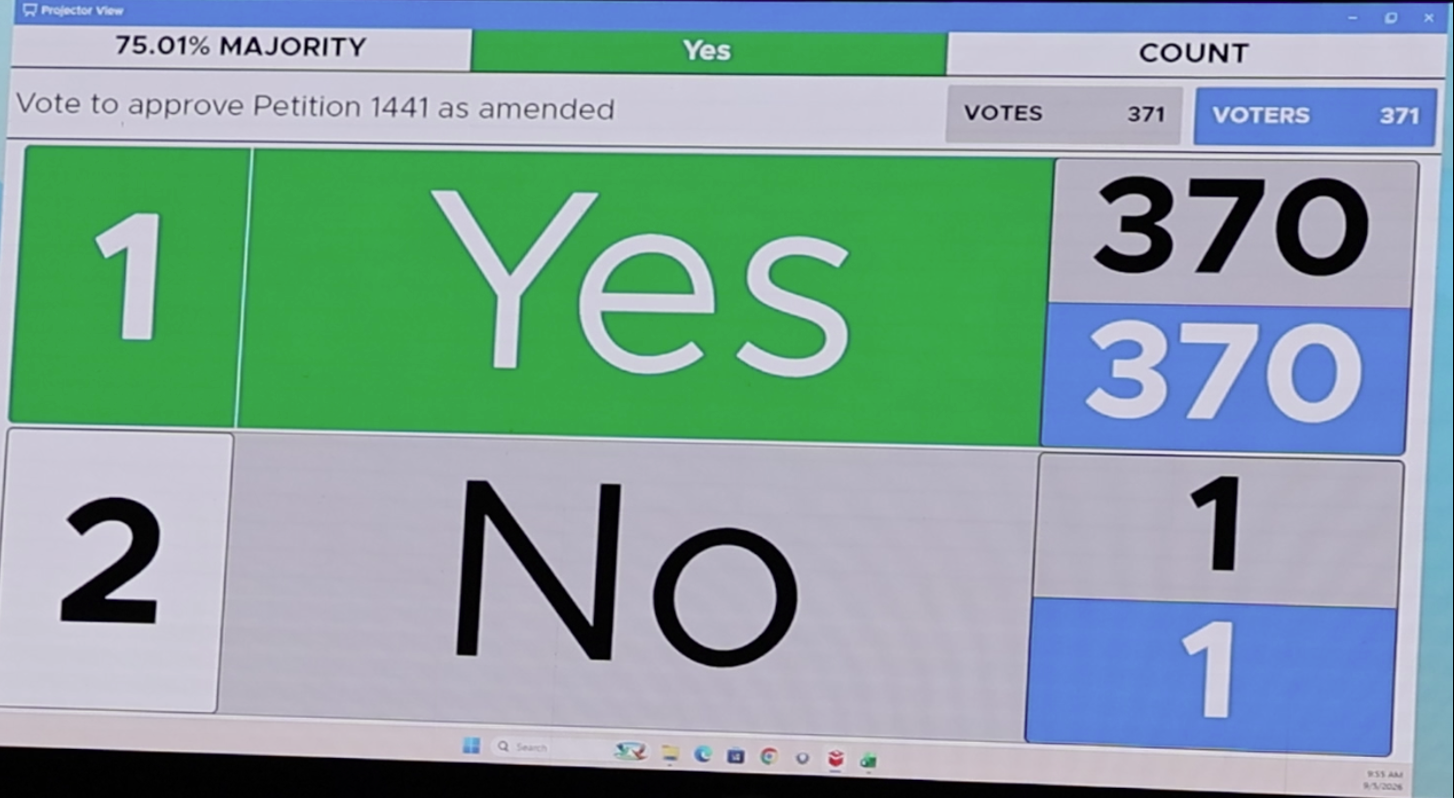
The articles of faith passed 370 to 1 and I have heard someone has come forward and said they misclicked on the one no vote. We sang the doxology after we passed the Articles of Faith and had a speech of appreciation from Bishop Jones who spoke at our church in 2026.
I was telling Brandy this is an historic moment. While each conference is historical and each one we elect bishops this was a once-in-a-lifetime to see an Article like this be born. I heard someone say today it might not happen for another 400 years.
Safari
So the last day we had nothing on the schedule until our flight at 10:00 p.m. Brandy was adamant we should go on a safari. With my little knowledge I knew we would need to hire a private driver, head about 2.5 hours into the wilderness, and hope to get back to the airport in time.
It all went very well. We left the hotel around 7:00 a.m. and really for the first time we saw Johannesburg past our hotel. We had driven in at night and had not gone anywhere.
We also noticed our driver was driving pretty fast. Apparently stop signs are optional on Sunday morning.
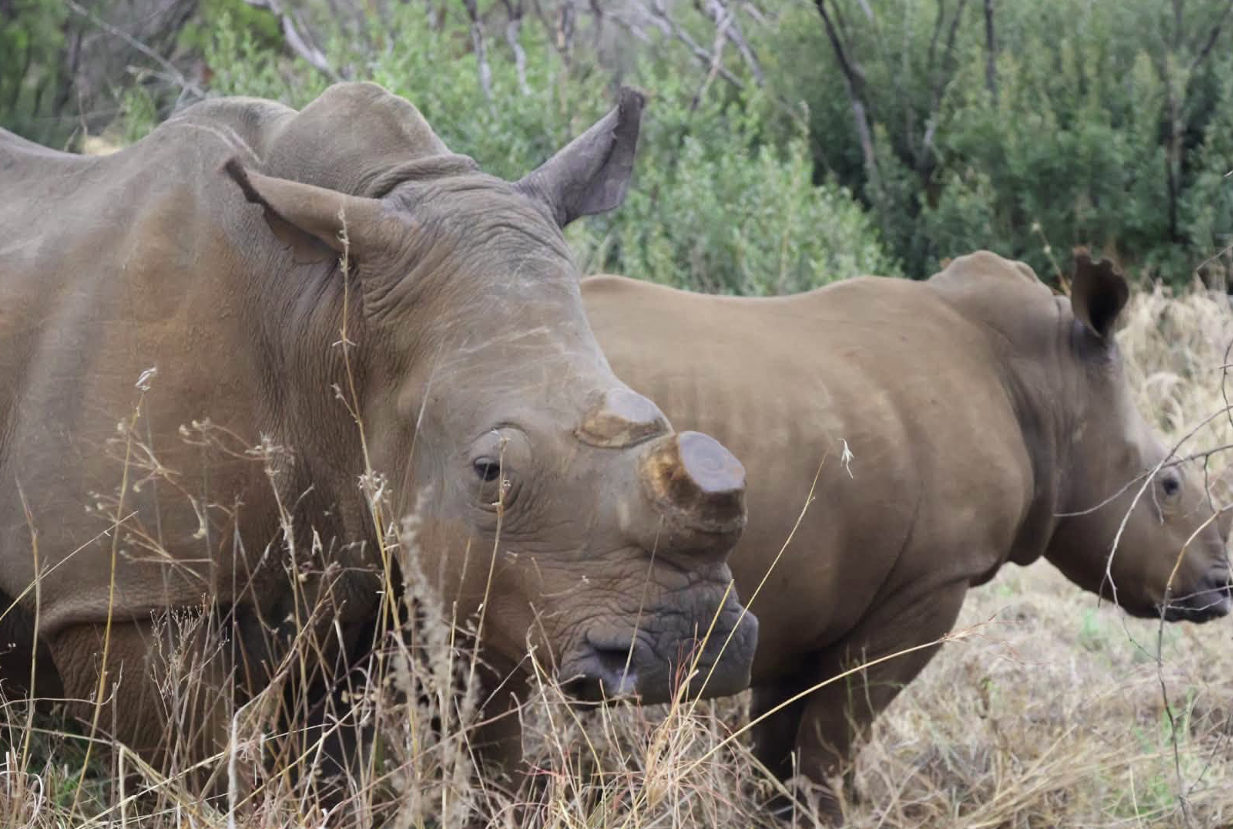
We enjoyed seeing some animals at the Pilainesburg nature reserve. We saw hippos, rhinos, zebras, giraffes, leopards, wildebeest, elephants, and tigers.
It was beautiful to see all the wildlife out there.
Unfortunately on Thursday I started feeling sick with what we would learn after returning to the United States was the flu. So it made the last few days, the safari, and the 16-hour flight a little miserable.
Conclusion
Thank you for letting me share a little bit about the overview of the trip. I plan to share more about the General Conference with our church. I would love to devote an entire Primetime to talking about the friendships and partnerships made. In particular, I filmed an update from Rev. Sam Magumba on his ministry. And I filmed a video with my friend who runs an orphanage in a country where it is risky to even name.
Friends, God is awesome. No matter our denominational affiliation the Father, Son and Holy Spirit can be enjoyed for the rest of our days and all eternity. However, being a part of a connectional body, our Global Methodist focus on Grace, and our friendship across borders is truly beautiful and helps understand God’s world and Kingdom even better.
We can be proud of this small but vital movement of Methodism we are a part of.
Closing Prayer
God, your world is so big and beautiful. Let us see your beauty in all of creation. We thank you for our connections across the globe. Most of all we thank you that you are a personal God. Father, in the same way you made your entire people and all the races, you made each one of us. Jesus, you died for each one of us because of your love for us. Spirit, help us to walk with you all the days of our lives. Amen.
