24 Hours that Changed Methodism in 2025
May 1, 2025
This week, we witnessed what may have been the most consequential 24-hour stretch in Methodism of 2025. Here were Four important developments.
#1 Bishop Scott Jones Statement
Here was Global Methodist Church (GMC) Bishop Scott Jones post on facebook on April 30th:
I regretfully and reluctantly have come to the conclusion that the United Methodist Church in Nigeria is using violence as an intentional strategy. My wife and I were present and nearly caught up in one violent act. Since then, there have been too many incidents where UMC people have brought machetes and guns to a property currently controlled by the Global Methodist Church. People have died and been injured. Property has been stolen and homes set on fire.
The GMC’s position is that we are willing for the courts to decide any claims that the UMC group wishes to bring. We believe that our position is strong and will be upheld by an honest judicial process. The four annual conferences voted unanimously to change their legal registration and to align with the Global Methodist Church. We are not a breakaway group, but we are the main Methodist group continuing the legacy of the last 100 years.
The GMC Assembly of Bishops has issued a call to prayer for peace all over Africa, including Nigeria. May God intervene and bring peace in Nigeria and all of the continent.
#2 Global Methodist Announce General Conference Location
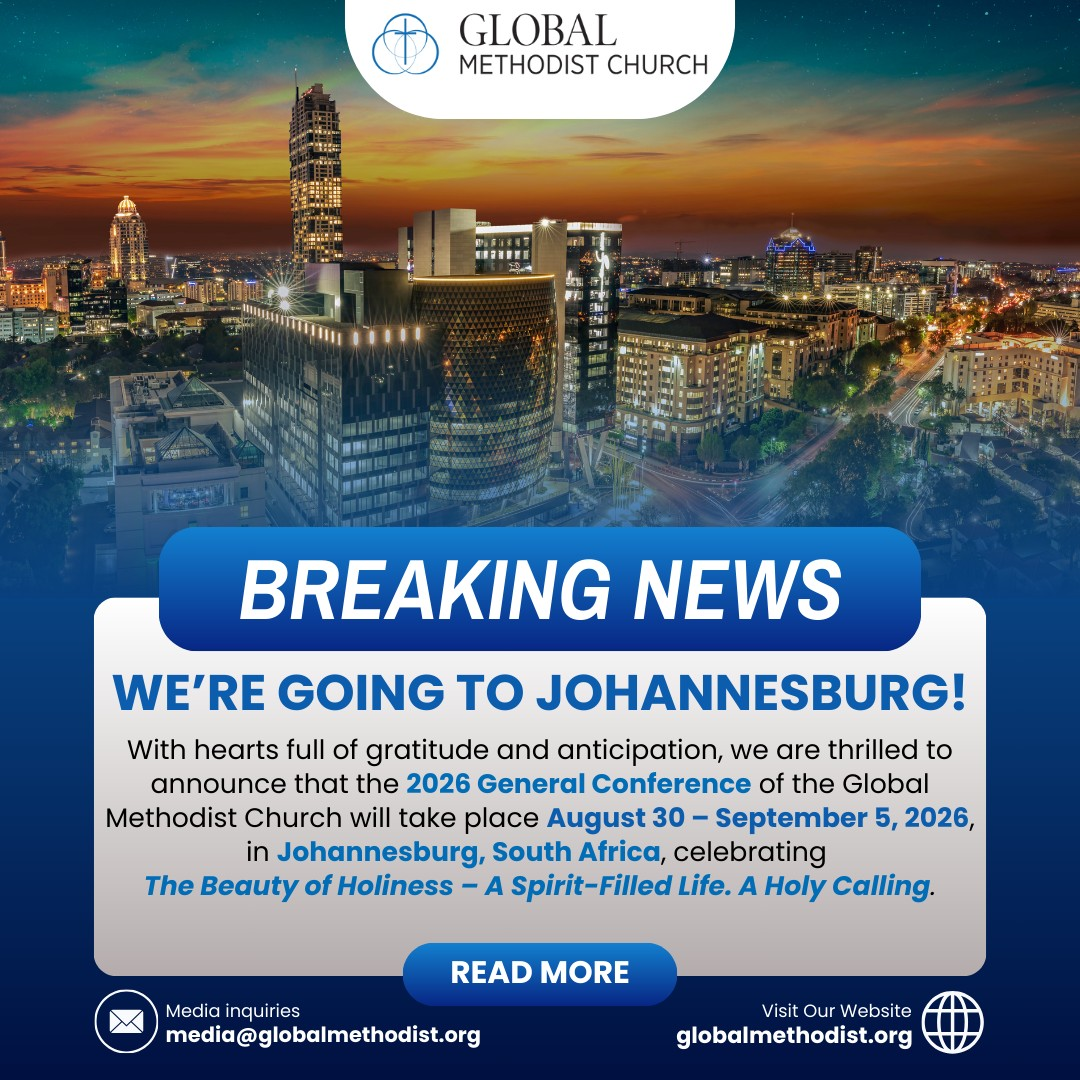
The Commission on the General Conference of the Global Methodist Church announced the 2026 General Conference will be held in Johannesburg, South Africa, from August 30 through September 5, 2026.
This again solidifies the GMC as a truly global body. It also is the first time a Global Methodist General Conference is held on the continent of Africa. Thanks to Rev. Beth Anne Cook for pointing out the Free Methodist Church has had a general conference session in Africa.
#3 David Watson Preaches First Chapel Service at Asbury Theological Seminary
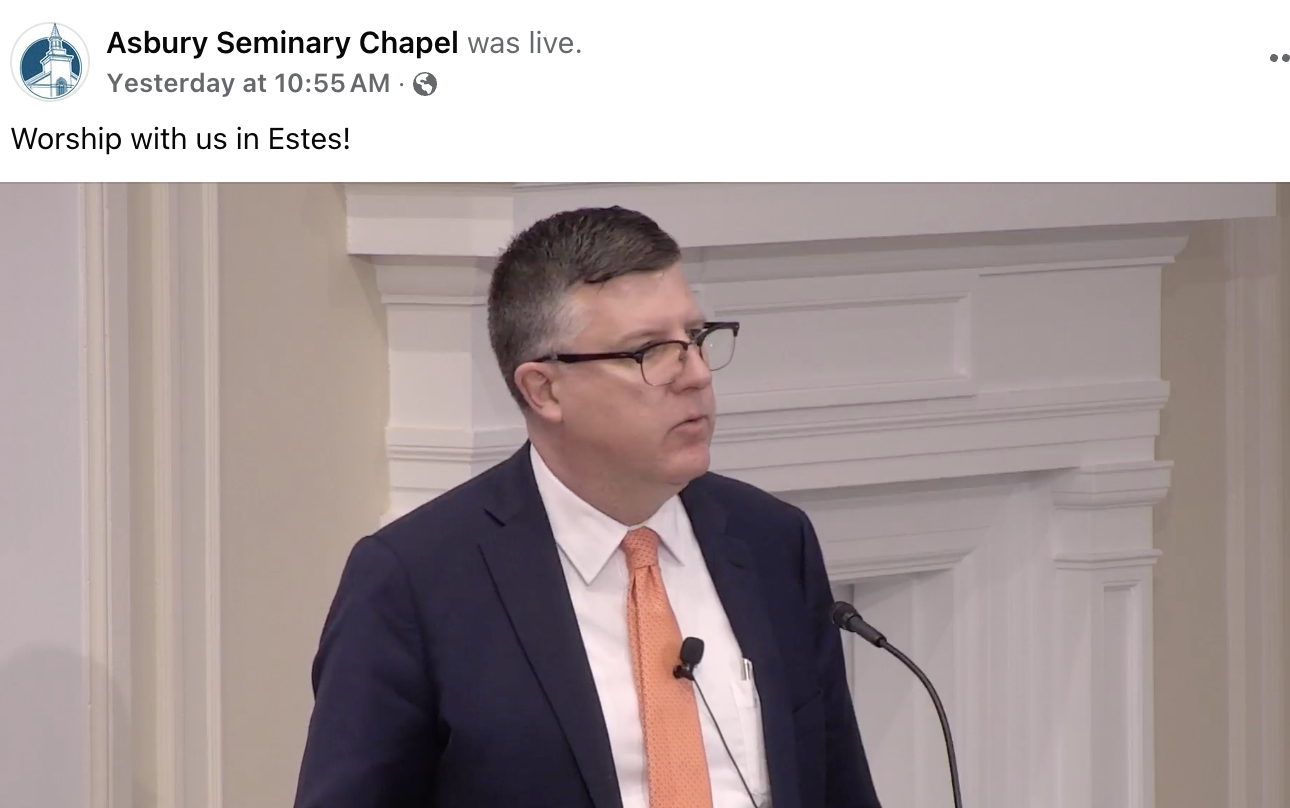
President Elect of Asbury Theological Seminary, David Watson, preached his first chapel service since the announcement of his new role. It is the beginning of a new era in Methodism’s most important seminary. I am very excited for Dr. Watson’s leadership at Asbury and look forward to going back and watching this message.
Disclosure: As an Amazon Associate, I earn from qualifying purchases. This means I may receive a small commission if you click on an affiliate link and make a purchase, at no additional cost to you. Thank you for supporting my work!
About David Wesley Donnan
I write online about Methodism, devotional insights, and personal reflections. My primary goal is to organize my thoughts and explore meaningful topics. Along the way, I hope my writing inspires and encourages others on their journey.
More From David
Follow Me on Social Media
Palm Sunday – Sunday April 13th, 2025 Luke 23:26-56
April 14, 2025
Introduction
Usually my wife is at school and picks up the children and takes first crack at homework. This means making sure my children do 20 minutes of reading time… even though they try to convince me their teachers “don’t really care” about it. This means they study for upcoming tests. And this usually means we study vocabulary words.
My son’s definition this past week deals with literary terms like flashback, imagery, and climax. These are actually terms we use in Bible study.
Since December of 2023 we have been studying the Gospel of Luke. Today, we are entering the climax of chapter 23, the high point of the Gospel of Luke, the turning point in all the Gospels, the hinge of the whole bible, and the turning point of all of human history.
Today we enter the death of Jesus on the cross which leads to his resurrection on Easter.
The Cross as an Odd Symbol
Priest Fleming Rutledge talks about how it is hard for us to understand the cross in our modern context. She says,
We are so accustomed to seeing crosses, wearing them on chains, carrying them in processions, and so faith, that it is almost impossible to grasp their original horror. We are accustomed to thinking of the Cross merely as a ‘religious symbol’…The typical ‘religious’ Easter card shows the Cross in a soft, flattering light, surrounded by lilies; you would never know that it was originally an instrument of extreme brutality. We need to make a conscious effort to understand that the Cross in reality is, by a very long way, the most irreligious, unspiritual object ever to find its way into the heart of faith. This fact is a powerful testament to the unique significance of the death of Christ.”
So under Rutledge’s advice is humbly tenderly listen to Luke 23:26-56.
Luke 23:26-34
26 As the soldiers led him away, they seized Simon from Cyrene, who was on his way in from the country, and put the cross on him and made him carry it behind Jesus. 27 A large number of people followed him, including women who mourned and wailed for him. 28 Jesus turned and said to them, “Daughters of Jerusalem, do not weep for me; weep for yourselves and for your children. 29 For the time will come when you will say, ‘Blessed are the childless women, the wombs that never bore and the breasts that never nursed!’ 30 Then
“‘they will say to the mountains, “Fall on us!”
and to the hills, “Cover us!”’
31 For if people do these things when the tree is green, what will happen when it is dry?”
32 Two other men, both criminals, were also led out with him to be executed. 33 When they came to the place called the Skull, they crucified him there, along with the criminals—one on his right, the other on his left. 34 Jesus said, “Father, forgive them, for they do not know what they are doing.” And they divided up his clothes by casting lots.
Jesus the Includer
Jesus, on the way to the cross prays one of the boldest prayers for the people around him. For the people who are literally killing them he asks for them to be forgiven. The ultimate Christian ethics is not to see others punished. While yes we want justice… we also want to practice forgiveness to others.
Jesus here is not just praying for those around the cross, the disciples who abandoned him, and pilate in his palace… I believe He is praying for you and me. Father, forgive them, they know not what they do.
Sometimes you will hear of a dramatic moment when someone can pinpoint the moment they were saved. Well if you can not you are in luck. Let me help you. It was 2,000 years ago. Not when we prayed a prayer but when Jesus performed an act of love on the cross.
Jesus shows us love in the way he extends grace to all humanity. Now, there is still a human element. We have to open the gift. We have to respond to this love, but here the gift of grace is clearly demonstrated.
Jesus is an includer and grace giver even on his way to death.
Luke 23:35-43
35 The people stood watching, and the rulers even sneered at him. They said, “He saved others; let him save himself if he is God’s Messiah, the Chosen One.”
36 The soldiers also came up and mocked him. They offered him wine vinegar 37 and said, “If you are the king of the Jews, save yourself.”
38 There was a written notice above him, which read: this is the king of the jews.
39 One of the criminals who hung there hurled insults at him: “Aren’t you the Messiah? Save yourself and us!”
40 But the other criminal rebuked him. “Don’t you fear God,” he said, “since you are under the same sentence? 41 We are punished justly, for we are getting what our deeds deserve. But this man has done nothing wrong.”
42 Then he said, “Jesus, remember me when you come into your kingdom.”
43 Jesus answered him, “Truly I tell you, today you will be with me in paradise.”
Jesus the Rescuer
Here is another moment to pause and reflect. Jesus wants to bring us with him to paradise. I can remember a conversation with my mother where she said, “If life was fair I would have a butler bringing me drinks as I sat on the beach everyday.” To which I replied, “If it was fair your butler would have to have a butler, and then there butler also.” It seemed about as logical as a communist utopia. It just doesn’t work that way.
Yet, Jesus does work in a delightful and irresistible way. He says, “today you will be with me in paradise.” One bible scholar says this:
“Jesus’ response is perhaps the most beautiful promise in Scripture… today you will be with me in paradise.’ This is far more than the man had been hoping for, for he was thinking of the distant future, while Christ promises immediate results.
That same scholar goes on to describe “Paradise” was a Persian word for royal gardens which was a reminder of how paradise might not necessarily be the streets of Gold we think or my mama’s dream of the butler on the beach but a call back to the peace man had with God in the garden of Eden.
Jesus is willing to rescue and bring all who call on him to paradise.
Luke 23:44-56
The Death of Jesus
44 It was now about noon, and darkness came over the whole land until three in the afternoon, 45 for the sun stopped shining. And the curtain of the temple was torn in two. 46 Jesus called out with a loud voice, “Father, into your hands I commit my spirit.” When he had said this, he breathed his last.
47 The centurion, seeing what had happened, praised God and said, “Surely this was a righteous man.” 48 When all the people who had gathered to witness this sight saw what took place, they beat their breasts and went away. 49 But all those who knew him, including the women who had followed him from Galilee, stood at a distance, watching these things.
The Burial of Jesus
50 Now there was a man named Joseph, a member of the Council, a good and upright man, 51 who had not consented to their decision and action. He came from the Judean town of Arimathea, and he himself was waiting for the kingdom of God. 52 Going to Pilate, he asked for Jesus’ body. 53 Then he took it down, wrapped it in linen cloth and placed it in a tomb cut in the rock, one in which no one had yet been laid. 54 It was Preparation Day, and the Sabbath was about to begin.
55 The women who had come with Jesus from Galilee followed Joseph and saw the tomb and how his body was laid in it. 56 Then they went home and prepared spices and perfumes. But they rested on the Sabbath in obedience to the commandment.
People of Committing
Church, we can not die for the sins of the world. Yet, we are called to follow the path of Jesus: To self sacrifice, to include others in this radical mission here in this life, to offer the forgiveness of God to the world… We can look at this passage and see the pinnacle of the story of Jesus… and acknowledge we can not be this perfect sacrifice.
So what do we do? We can be people of commitment. We can, like Jesus, commit our whole being to God. Jesus prays Psalm 31:5, “Into your hands I commit my spirit.”
We can model this lifestyle. A life committed to God might look like an awareness that we need to commit our lives to God, it might look like the sermon on the mount where we commit ourselves more to the poor and needy, the widow and the orphan, or the sojourner in our midst. It might start in our home as we view our family as a little church, the first church, our neighbors we are called to love start with those we live with.
And no matter where we are called to love, there is only one way to do this… with God’s help.
The Story of the Jump
There was a story from a couple weeks ago from the horrible earthquakes in Myanmar. We prayed for those affected where over 3,600 people have died and the country is in a civil war. The earthquake was felt all over Asia including in Bangkok, Thailand.
There, a South Korean family of three was staying in a high rise complex. The father, Kwon Young Jun, was on the 52nd floor of the adjacent building which was connected by a sky bridge 600 feet in the air. The earthquake shook the whole building and tore apart the sky bridge. The father, realizing his family could be in danger, did something out of a Hollywood movie and jumped across the 600 foot gap of the sky bridge to get back to his wife and child.
The Story of Good Friday
The Story of Good Friday is God will no longer have our sin separate us from him. Jesus took the ultimate leap of love for us with his death on the cross so nothing can separate us from him. Whether we are criminals beside him, disciples who abandon him, or the crowds who mock him.
God created us all in His image and wants to share his love with each of us.
Friends, do not be like the thief on the cross who continued to mock Jesus. Let’s know we have a God who is willing to remember us. Let’s commit our lives to this great God. Let’s receive the grace and forgiveness offered to each one of us.
Closing Prayer
Would you pray with me?
Gracious God, we thank you for the rescue mission for humanity through Jesus on the cross. Lord, help us to be people who truly commit our life to you. Daily, help us to see ourselves in the thieves on the cross and by your grace, to choose to be the one who turns to you. In Jesus Name. Amen.
24 Gratitudes from 2024
December 31, 2024
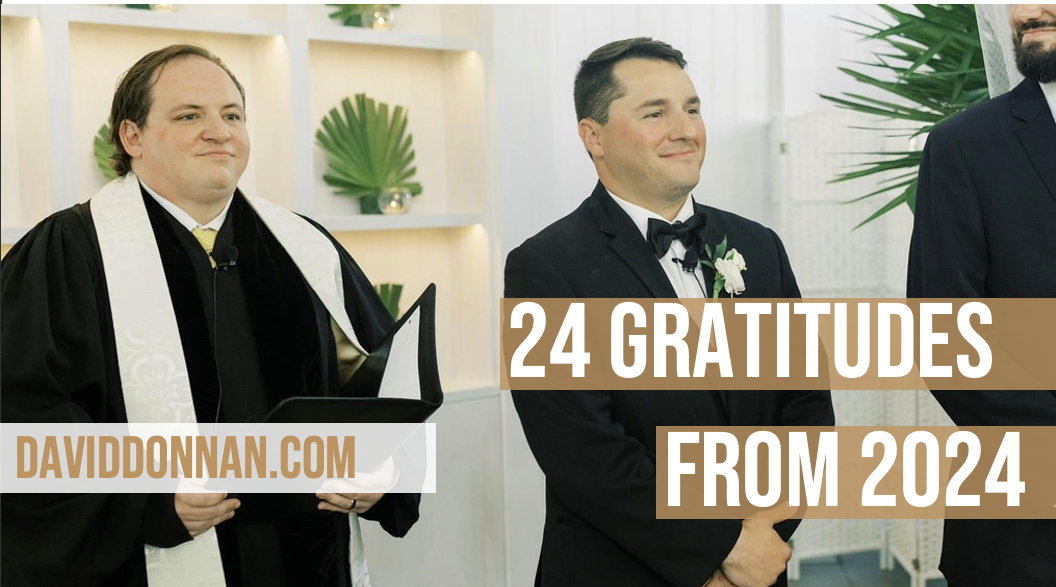
As we prepare to enter a new year, I find it meaningful to pause and reflect on all the things I’m thankful for from the past year. Here are 24 highlights from 2024, in no particular order:
#1 New Communication Role
In December, I joined the South Georgia Conference of the Global Methodist Church in a part-time role. I’m excited to help the conference stay connected and share the story of what God is doing among Methodists in South Georgia and beyond.
#2 Protection During Hurricane Helene
Hurricane Helene, the second major storm of 2024, caught everyone off guard. While my community wasn’t hit as hard as parts of Georgia and North Carolina, we still faced significant challenges. Trees were down, power lines lay in tangles, and the cell tower was out of commission.
The night of the storm was one of complete isolation. We lost power, cell phone service, and even our weather radio wouldn’t connect. In the silence and uncertainty, we relied on God’s protection—and He was faithful.

In the aftermath, communication was nearly impossible. We couldn’t even notify the congregation whether we’d have worship. Yet, to my amazement, a great group showed up for both services. They came not knowing if the church had power or if anyone else would be there. Their faith and determination to worship in the face of uncertainty were a powerful testimony to God’s grace and presence.

#3 New Roof on the Church and the Parsonage
In June, a severe hailstorm caused significant damage to both our church and parsonage. The aftermath required replacing the roofs on both buildings—a big undertaking, but one that proved to be a blessing in disguise.
When Hurricane Helene swept through later in the year, the new roofs held firm, protecting both structures from further damage. Many in our area are still waiting for roof repairs, a reminder of how fortunate we were to complete ours in time. I’m especially thankful for the hard work and dedication of our church trustees, whose efforts ensured we were better prepared for the challenges of the hurricane season.
#4 Reading with Other Preachers
One of the wonderful emphases in the Global Methodist Church is fostering community among pastors. This year, I had the privilege of reading Astonished by the Word: Reading Scripture for Deep Transformation (#ad) by Brian Russell with a group of fellow preachers. It quickly became my favorite book of the year.
What made the experience even more meaningful was the shared journey of studying and discussing the book together. Reading in community brought fresh insights and a deeper appreciation for how God speaks through His Word. It was a powerful reminder of the strength and encouragement that comes from walking alongside others in ministry.
#5 My First Advanced Copy of a Book
This year, I had the unique privilege of reading an advanced copy of Jesus and the Powers: Christian Political Witness in an Age of Totalitarian Terror and Dysfunctional Democracies (#ad) by N.T. Wright and Mike Bird. These two giants of theology are among the greatest living thinkers, and diving into their work before its official release felt like stepping into the future.
When the book was finally announced, it was exciting to see it introduced to the world. I had reached out and was fortunate to secure an advance copy. While I’m not sure I moved the needle on sales enough to justify it, the experience was a thrill—like being a time traveler getting an early glimpse of something transformative.
I also had the chance to interview Mike Bird, which was an incredible opportunity to explore the ideas behind the book in more depth. If you’re curious, you can check out my conversation with him here.
#6 Budget Flights
One of our favorite approaches to travel comes from a saying I first heard from consumer advocate Clark Howard: “Find the deal, then figure out why you want to go there.”
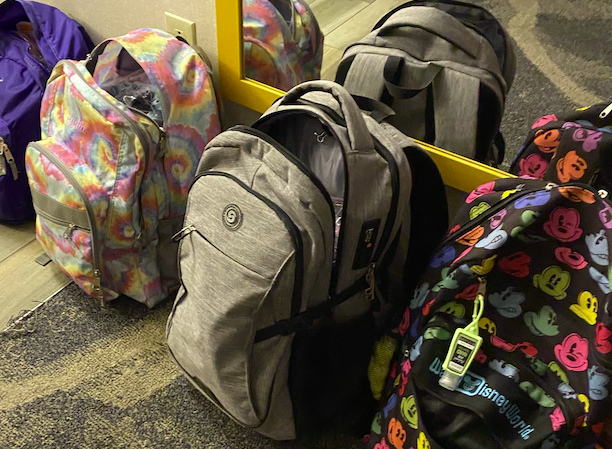
Early this year, we stumbled upon a fantastic deal on flights from Atlanta to Chicago—tickets for all four of us cost less than $325! Naturally, it was a budget flight, so we embraced the challenge of packing all our belongings into backpacks.
#7 Visiting Chicago
Well, where was the flight to? We had a blast visiting Chicago for the first time. I loved the city so much. Highlights of our trip included indulging in authentic Chicago-style hot dogs, exploring the Griffin Science Museum, and marveling at the city’s skyline during an architecture boat tour. We also had the chance to visit my cousin Laura, who lives in Chicago, making the trip even more special.
Chicago exceeded all expectations, and I can’t wait to go back!

Also, deep dish is gross.
#8 Coffee Adventures
Toward the end of the year, I rediscovered my love for French press coffee and have been enjoying the richness it brings to my mornings. For Christmas, I received a pour-over coffee dripper (#ad), which has been a fun new experiment. While I’m still mastering the technique, it’s been a rewarding process.
There’s nothing quite like the aroma of freshly ground beans filling the air in the morning. It’s a small but meaningful way to start the day with joy and gratitude.
#9 The Convening Conference of the Global Methodists Church
The Global Methodist Church held its first global gathering. It was a beautiful moment. While I was unable to attend as an in person spectator I was able to view it from afar.
You can read more about some of the surprises from the General Conference.
#10 Pediatric Orthopedics
Parenting always comes with surprises, and this year was no exception—our family managed not one but two broken bones on the same leg! These injuries meant several trips to Savannah to visit our pediatric orthopedist.

Looking back, I’m deeply grateful for the blessing of accessible medical care. Having a skilled pediatric orthopedist within driving distance is a true gift from the Lord. I’m also thankful for reliable transportation and mostly clear roads to get us there safely. While the road to recovery hasn’t been easy, everyone is doing much better, and for that, we give thanks.
#11 A Year of Gaming
Brandy really outdid herself for Christmas 2023. She pulled off a classic move by giving me a PlayStation 5 game, even though we didn’t have the system at the time. I genuinely thought it was a mistake! Then, to my surprise, she had a PlayStation 5 console waiting for us.
It’s been so much fun connecting with my kids through gaming. They really enjoyed Astro Bot (#ad)(though I still haven’t beaten it!). Together, we powered through Marvel Spiderman 2 (#ad) and Jedi Fallen Order (#ad), and I also had a blast with College Football 25 (#ad), though I do miss the older versions. After some convincing from my nephews, I finally finished Red Dead Redemption 2 (#ad).
This year, I received five new games for Christmas. Without much help from my kids, it’ll probably take me years to finish them all! But beyond the games themselves, I’ve cherished how gaming has become a way to bond with my children and also a great way to unplug from work.
#12 Mrs. Hunt’s Retirement Celebration
One of the highlights of this year was returning to my alma mater, Crisp Academy, for a celebration in honor of Mrs. Helen Hunt. Mrs. Hunt was a pivotal figure in my education—she played a key role in fostering my love for reading and learning.

It was a truly special moment to not only revisit the school I attended but also to share that experience with my children. Celebrating such a talented teacher, who had such a lasting impact on my life, made the occasion even more meaningful.
#13 A Great Confirmation Class

In the Methodist church, we celebrate the milestone of young people going through confirmation—a time of learning about the church and its purpose. During this process, children are invited to make a public profession of faith and formally join the church.
This year was especially meaningful for our family, as one of my children was part of the confirmation class. The experience was further enriched by a wonderful confirmation retreat led by my youth pastor, Wesley Marshall, at Epworth by the Sea. It was a beautiful and significant time, and I will cherish the memory of sharing it with my child.
#14 Completing a Half Marathon with Brandy
In early 2024, Brandy and I crossed the finish line of the Combos Half Marathon in Albany, GA. It was my second half marathon and Brandy’s first, and it made the experience all the more special to train together. We had a great time as training partners, making the journey enjoyable and motivating each other along the way.
While we don’t have any races lined up for 2025, we’re thinking about tackling another half marathon in 2026. It’s been a rewarding experience, and we’re looking forward to the next challenge!

#15 Glennville Connectional Community Forms
We’ve experienced tremendous growth in the South Georgia Conference of the Global Methodist Church, and in our area, it has meant reshuffling some of our connectional communities—groups of churches that work and fellowship together. I have the privilege of serving as the leader of the Glennville Connectional Community.
In this role, I’ll be helping the nine churches in our area with any pastoral transitions that arise and assisting them in getting organized for the year 2026 as we approach the end of 2025. It’s a responsibility I take seriously, and I’m excited for the opportunities to support and serve these churches in the coming years.
#16 Honoring our Veterans
While many churches do an excellent job of honoring veterans, our church took it a step further this year with something truly special. During the worship service closest to Veteran’s Day, we unveiled a recently discovered plaque that listed the names of service members from our community who served during WWII.
It was a powerful moment that not only glorified God but also allowed us to remember and honor the brave men and women who served. It was a beautiful way to celebrate their sacrifices and reflect on the importance of faith and service.
#17 Date Nights with Brandy
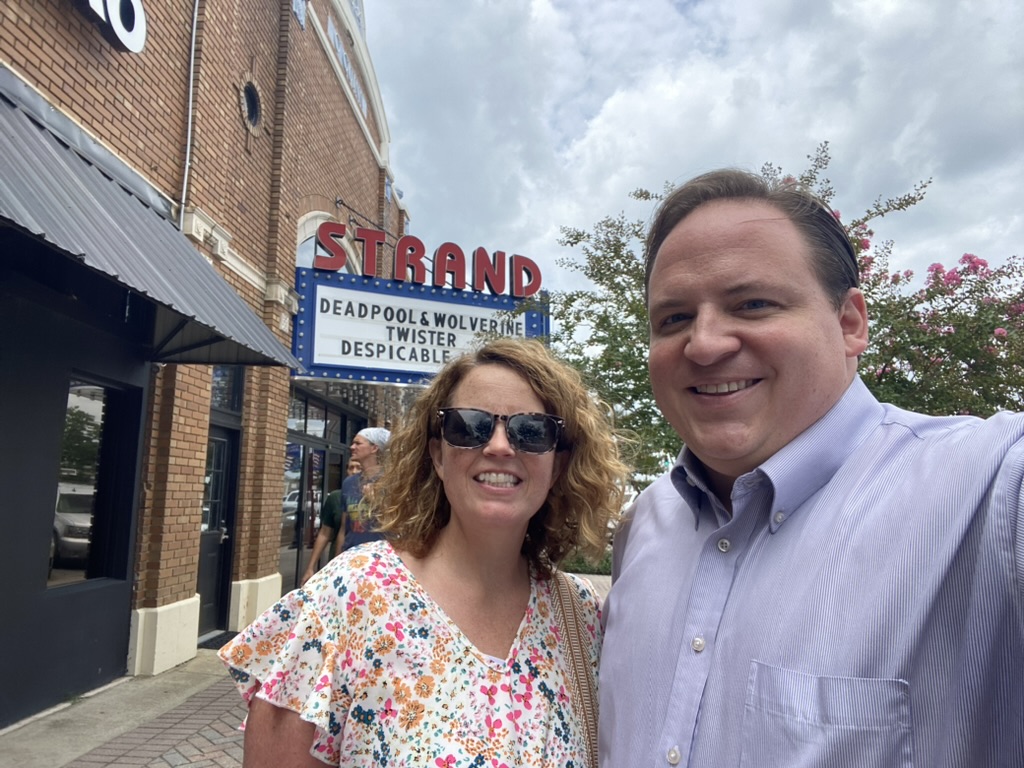
Brandy and I had another wonderful year of marriage, continuing to grow closer together while enjoying several memorable dates. One of my favorites was our time seeing movies together—just a simple yet special way to enjoy each other’s company.
Looking ahead to 2025, we’re planning to squeeze in a few trips together, which I’m really looking forward to. It’s a joy to share these experiences and deepen our bond even more.
#18 My Second Firebrand Article
I was grateful to have another article published in Firebrand Magazine, a Wesleyan online publication. This second article I contributed focused on providing further clarification on the roles that bishops will play in the Global Methodist Church. It’s always a privilege to engage in thoughtful discussions around church leadership and contribute to the wider conversation.
Read the article here.
#19 Progress Made on My Doctor of Ministry
My studies in my doctoral program continue as I focus on preaching and church leadership. I’ve been approved to run my project, which is set to take place this winter. I’m aiming for a May 2025 graduation, and I’m excited to see how everything comes together in these final stages of my program.
#20 Getting Interviewed on the Deep Dive Spirituality Podcast
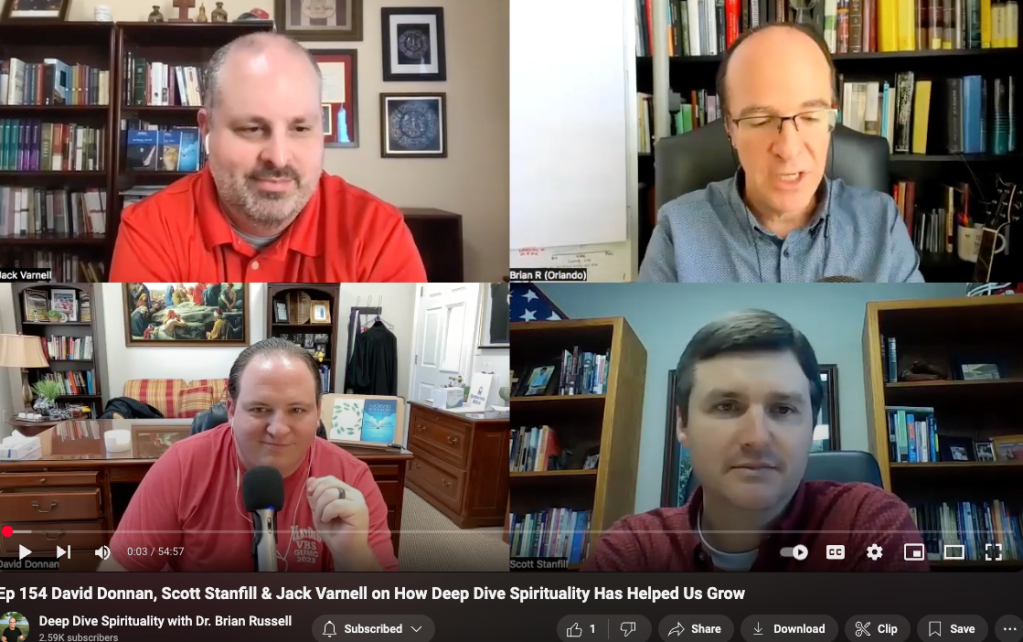
I had been in a coaching group with pastors for several years. Our coach and mentor, Brian Russell, had us on his podcast. You can see the video below.
#21 Brandy is Teacher of the Year for Tattnall County
I’m incredibly proud of Brandy, who was named Teacher of the Year for Tattnall County. It’s a reflection of her hard work, dedication, and passion for teaching. I often joke that when we move into a new community, I’m the more popular one at first—at least until people hear about her incredible teaching skills. Then, I quickly become “Mrs. Donnan’s husband”!
Brandy is truly a talented educator, and I strive to bring the same level of effort, professionalism, and heart to my work in the pulpit that she brings to her classroom.

#22 Thanksgiving with My Brother
I have such an awesome family, and spending time with them is always a treat. This year, we celebrated Thanksgiving in the Washington D.C. area with my brother, and it was a wonderful time. Our families really enjoy each other’s company, and it was great to be together.
One of the highlights was that my brother and I were able to sneak away for a little while and watch Gladiator 2. It was such a fun experience to see the sequel to a movie that had meant so much to us years ago. It was a special moment, and I’m thankful for these memories with my family.

#23 Discovering a John Wesley Historical Site
While the girls went to see Disney on Ice, the boys took a trip to Fort Pulaski. I supposedly visited as a child, but I didn’t remember it, so it felt like a new experience. One of my friends had told me to check out a special marker near the fort, and it turned out to be the spot where John Wesley, the founder of the Methodist movement, preached his first sermon in America.
As we stood there, I joked to my son, “Just think, the same sand gnats which bit Mr. Wesley, their ancestors are biting us right now.” It was a fun moment of connecting history with the present.

#24 Aubrey Ray and JP Padilla Wedding

Every wedding I get to do is very special. This is the second wedding I did for someone in Aubrey Ray’s family. What made it even more special is I was once a coach of JP’s many moons ago at Bulloch Academy in Statesboro, GA. It is crazy to believe I have been in ministry long enough for this to even be possible. It was a great weekend, great fun, and a great couple.
Conclusion
As I reflect on these 24 things I am grateful for in 2024, I’m reminded of the countless blessings that have shaped this year. From the joys of spending time with my family and the growth in my personal and professional life, to the protection and provision through challenges, I see God’s faithfulness in every moment.
This year has been a testament to the importance of community, love, and perseverance. It has been a year of growth, not only in my relationships but also in my faith, my work, and my personal endeavors. I look forward to carrying the lessons of 2024 into the new year with a heart full of gratitude and anticipation for all that is to come.
What are you thankful for from 2024?
Disclosure: As an Amazon Associate, I earn from qualifying purchases. This means I may receive a small commission if you click on an affiliate link and make a purchase, at no additional cost to you. Thank you for supporting my work!
About David Wesley Donnan
I write online about Methodism, devotional insights, and personal reflections. My primary goal is to organize my thoughts and explore meaningful topics. Along the way, I hope my writing inspires and encourages others on their journey.
